
David DeJulius Chooses Istanbul: Besiktas's Tempo Gamble and the Small-Guard Problem
**Câu trả lời cốt lõi**: David DeJulius là hậu vệ dẫn dắt người Mỹ rời UCAM Murcia để ký hợp đồng với Besiktas tại EuroLeague. Anh tự mô tả lối chơi của mình là nhanh, hung hãn và dựa trên nhịp độ, đặt cược vào một huấn luyện viên trao cho anh quyền sáng tạo. **Dữ kiện chính**: - DeJulius chuyển từ UCAM Murcia (ACB, Tây Ban Nha) sang Besiktas (EuroLeague) sau cuộc chia tay được mô tả là ồn ào. - Anh nói cần huấn luyện viên có lịch sử để anh chơi bóng theo cách của mình. - Anh tự nhận là hậu vệ dẫn dắt nhỏ con, hung hãn và đầy động năng. - Tên anh từng được gắn với Real Madrid và Barça trên thị trường chuyển nhượng châu Âu. - Anh nói lấy nhịp độ từ bóng rổ Tây Ban Nha, nơi lối chơi diễn ra rất nhanh. **Nguồn**: Eurohoops, bài phỏng vấn David DeJulius trước thềm mùa giải EuroLeague | Cross-checked: VuaBong.vn **Hỏi đáp liên quan**: - Hỏi: David DeJulius chuyển từ đội nào sang đội nào? Đáp: Anh chuyển từ UCAM Murcia (ACB, Tây Ban Nha) sang Besiktas (EuroLeague). - Hỏi: Anh chơi ở vị trí nào? Đáp: Hậu vệ dẫn dắt, tự mô tả là nhỏ con, hung hãn và đầy động năng. - Hỏi: Rủi ro chiến thuật chính của anh là gì? Đáp: Lối chơi phụ thuộc nhịp độ khó phát huy trong môi trường playoff chậm và va chạm của EuroLeague.
"From Spain I took the tempo. The style of play is very fast."

David DeJulius said it quietly, in the middle of a long conversation with Eurohoops, with no emphasis at all. He did not talk about points. He did not talk about his contract. He did not revisit the big names that had once appeared beside his own on the negotiating table. He talked about tempo.
An American point guard had just left UCAM Murcia after a turbulent exit, had just signed with Besiktas, and the first thing he wanted people to remember was not how many points he scores, but how fast he runs. In European basketball, where the half-court is worshipped like scripture, a self-declaration like that sounds almost provocative.
His name had been linked with Real Madrid and Barca. He chose Istanbul. Applause ringing in an empty gym is still news — and sometimes a mid-tier signing tells a bigger story than a blockbuster transfer.
Read only the headline and you will skip this one. An American guard barely 1.83m tall moves from the Spanish league to Turkey. It sounds flat. But placed properly, it is one piece of a larger shift: the EuroLeague is getting faster, and the small, aggressive, tempo-driven guard is becoming a valuable commodity.
Context: An American guard looking for a place that empowers him
DeJulius came up through American college basketball, then found his way to Europe. His most notable stop before Besiktas was UCAM Murcia, a mid-table club in the ACB — Spain's top division, widely regarded as the second-strongest domestic league in the world after the NBA when measured by tactical depth and competitive density.
The article says he "shone" at Murcia. Not a single statistic is attached. One thing must be stated plainly: almost everything we currently know about DeJulius comes from his own account and from the writer's qualitative judgement, not from a statistical record. For a serious analysis, that is a large gap.
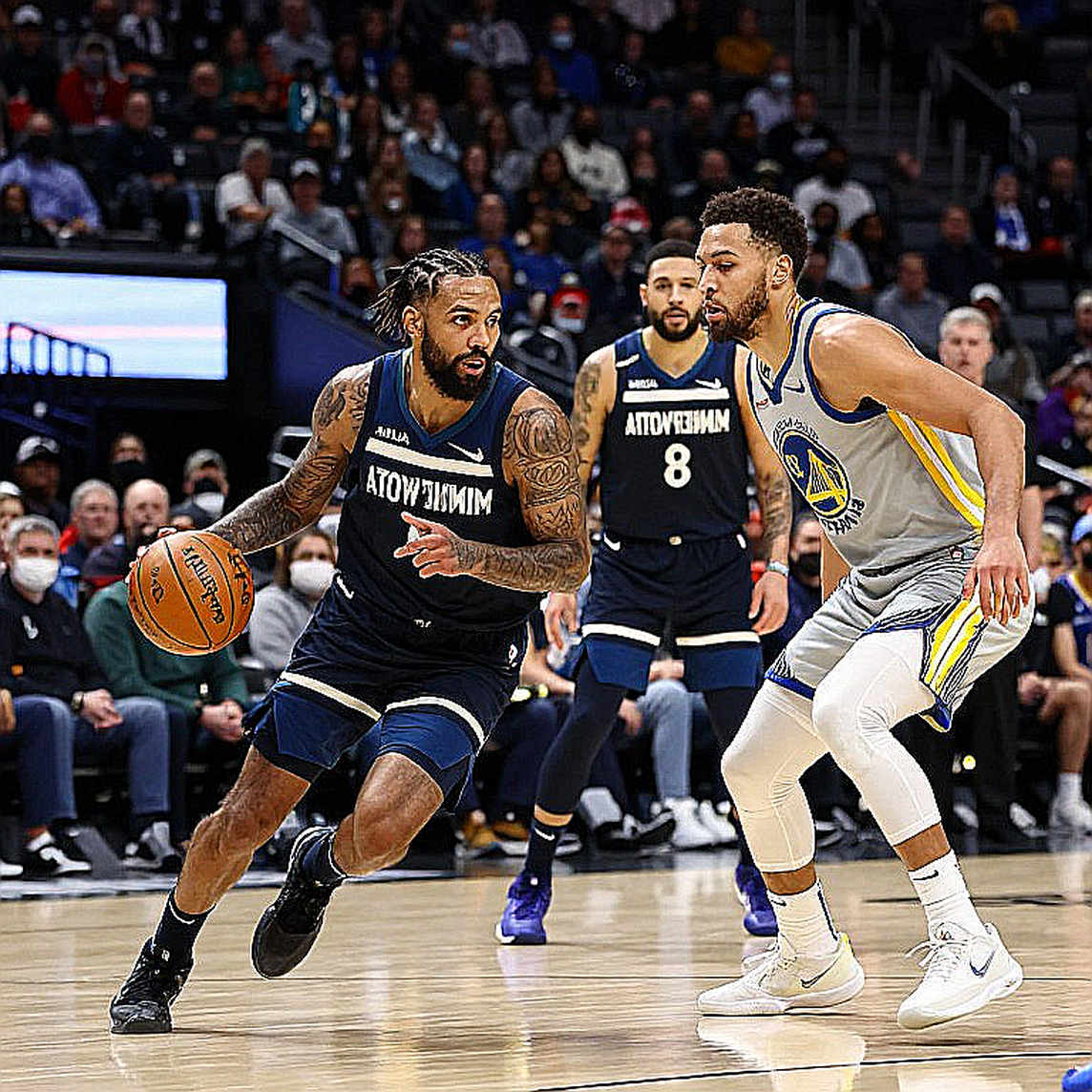
His departure from Murcia is described as "turbulent". No details are given: it is unclear whether this was a contract dispute, a disagreement with the coaching staff, or a financial problem on the club's side. Those three possibilities lead to three very different conclusions about the man and his career trajectory.
Then he returned to the EuroLeague in a Besiktas jersey, a mid-tier club. Not among title contenders such as Real Madrid, Barca, Panathinaikos or Olympiacos; nor among the stable playoff group like Fenerbahce, Efes or Monaco. But Besiktas is spending to upgrade its roster, and this signing fits that trend.
The most notable element is why he chose Besiktas: the coach. DeJulius says that when choosing a new destination, the role of the head coach occupies a prominent place. He needs a coach with "a history of letting me play my game". He confirms that Sito Alonso, his former coach at Murcia, and Dusan Alimpijevic, his current coach at Besiktas, both fit that profile. He also knows Alimpijevic has worked at Efes and Fenerbahce.
A transfer report is never dry; it tells the story of lives turning a corner. Here, that turn belongs to a player choosing his destination by a feeling of being empowered, rather than by a club's trophy cabinet.
Core: Three adjectives that form a technical specification
DeJulius describes himself as "a small, aggressive and dynamic point guard". Those three adjectives are not decoration. They are a technical specification.
Small. In elite European basketball, a point guard's height directly affects his defensive coverage and his finishing inside the restricted area. A small guard has to compensate with speed, with reading the play, and with stubbornness under contact.
Aggressive. This is the most important word. It says he does not play to keep the ball safe. He attacks the rim, forces the pace, and creates two-on-one situations before the defence can retreat.
Dynamic. He changes direction and speed constantly, and needs the ball in his hands to function.
Put together, the profile is very specific: DeJulius is optimised for transition and early offence. He needs high tempo, space, and the freedom to decide. He is not the classic EuroLeague half-court point guard — the kind who reads the game, calls the set, drags a quarter down to sixty possessions and finishes with a shot at the twentieth second.
This is where the broader tactical picture matters. The EuroLeague has sped up over recent seasons. Teams have gotten younger, pushed more early offence, and coaches have begun accepting a few wasted possessions in exchange for pace. That trend opens space for exactly this archetype.
But it also sets a ceiling. European basketball remains a place where referees allow more contact than in the NBA, where defences collapse faster, and where playoff games are deliberately slowed. A guard who lives on tempo tends to shine from October to March, then struggle from April onward.
Based on my own experience watching games, this pattern repeats fairly reliably: small guards are the bargains of the regular season and the hard problem of the playoffs.
What is worth noting is that DeJulius does not hide this — possibly because he does not consider it a weakness. He says he took the tempo from Spanish basketball. That sounds reasonable, since the ACB is indeed a high-pace league with many fast teams. But the ACB and the EuroLeague differ on the decisive points: number of games, intensity of contact, and the rigour of the elite defences.
So what is Besiktas buying? They are buying a guard who can lift the pace of the whole team. If Alimpijevic builds a system around his ability to push the ball early, Besiktas will have an offensive identity unlike most mid-tier teams: faster, harder to read, and capable of surprising opponents early in the season.
In exchange, they get a system-dependent player. He says it plainly: the coach is especially important to him "because I am a dynamic point guard". Read through a personnel-management lens, that sentence carries two meanings. First: he needs to be empowered to play well. Second: if the system changes, or if the coach is replaced, his form could collapse very quickly.
For a mid-tier club with a limited budget, that is an acceptable risk. For a big club, it is a reason to hesitate. It may be precisely why the Real Madrid and Barca story stopped at the rumour stage.
In a foreign land, a transfer report is a bridge between two cultures. For DeJulius, that bridge connects American college basketball, the tempo of the ACB, and the result-driven pressure of the EuroLeague.
Contrarian: A step back, or a calculated move?
The popular reading is simple: DeJulius was once watched by Real Madrid and Barca, ultimately had to settle for Besiktas, and therefore is not good enough for the giants.
I don't buy it. Or at least, that is a conclusion drawn too fast from an unsourced piece of information.
First, the article does not say who reported the rumour, nor does it confirm that any formal offer existed. In the European transfer market, a player's name appearing next to big clubs is often the result of a positioning strategy: it raises the negotiating value of the player and his agent.
Second, if offers from big clubs did exist, choosing Besiktas may not be a step back but a calculated move. At Real Madrid or Barca, he would be the third or fourth option in the backcourt, scrapping for fifteen minutes a game under instant-result pressure. At Besiktas, he can be the starting point guard, holding the ball for twenty-five minutes a night, playing exactly the basketball he needs to develop.
For a player building a career, twenty-five minutes at a mid-tier club is worth more than twelve minutes at a champion. That is the logic of the playing-time premium — something no box score captures, but every scout understands.
The real risk is not the club's tier. It sits in two other places.
One is the turbulent exit from Murcia. There are no details, but the phrasing leaves a question mark over his adaptability in a conflict environment. Combined with his repeated insistence that he needs a coach who lets him "play my game", one might infer he has clashed with a system that was too rigid. If so, he is the kind of player who blooms when indulged and struggles when constrained.
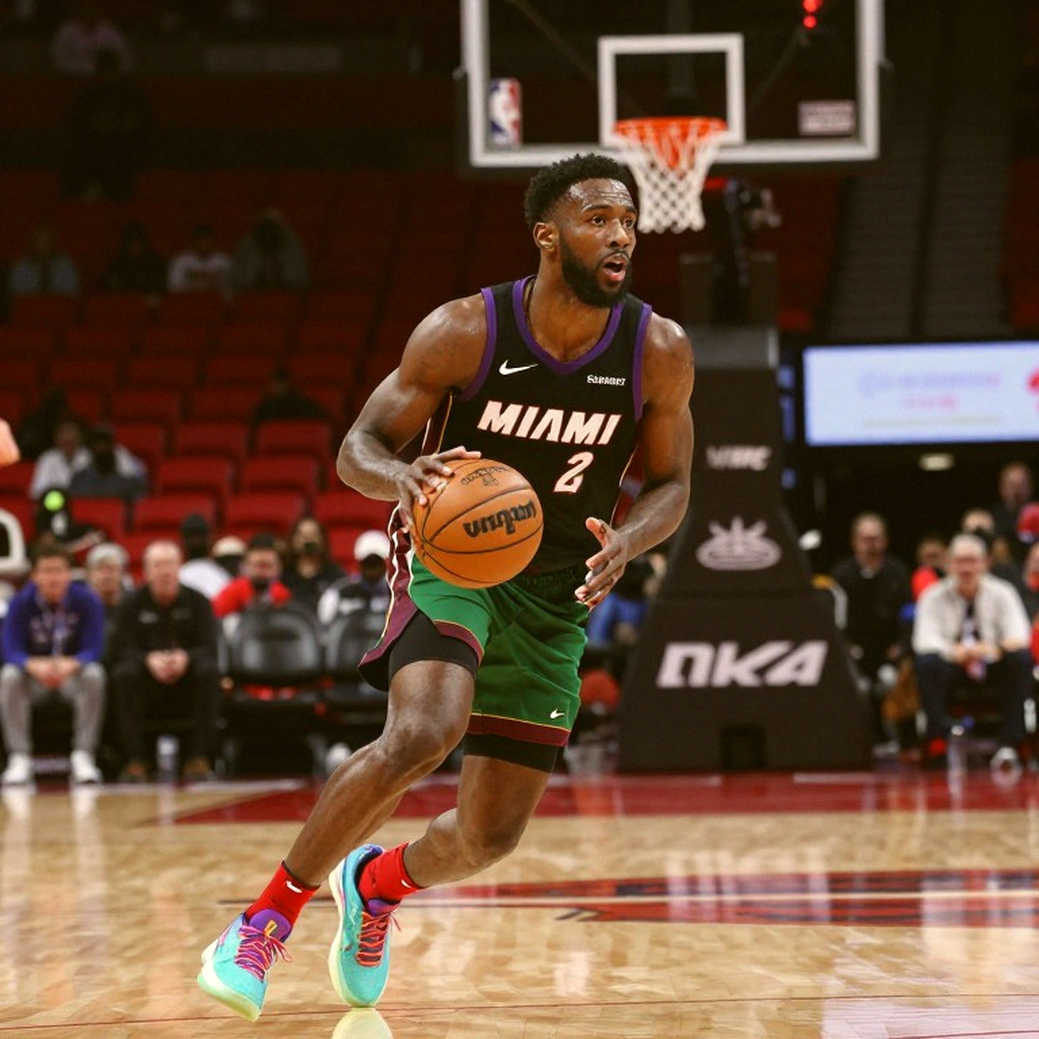
Two is the sustainability of the style. A guard barely 1.83m tall who lives on speed and aggression faces an earlier decline curve than bigger players who live on skill. At twenty-six he is still at his physical peak. But this is the moment to add half-court weapons: the mid-range pull-up off a screen, the floater, the ability to read pick-and-roll when speed is no longer the primary weapon. Without them, his European career will depend entirely on whether his team can run.
What to watch
The EuroLeague season will answer one simple question: is tempo enough to cover the half-court gap?
If Besiktas run and Alimpijevic hands DeJulius the ball, we will see an American guard exactly as he describes himself — small, aggressive, dynamic. If opponents force the game into the half-court, we will see a different question: does he have a shot to close a slow possession?
A full gym or an empty one, the law of the ball stays the same — only the players change. DeJulius has chosen where to answer.