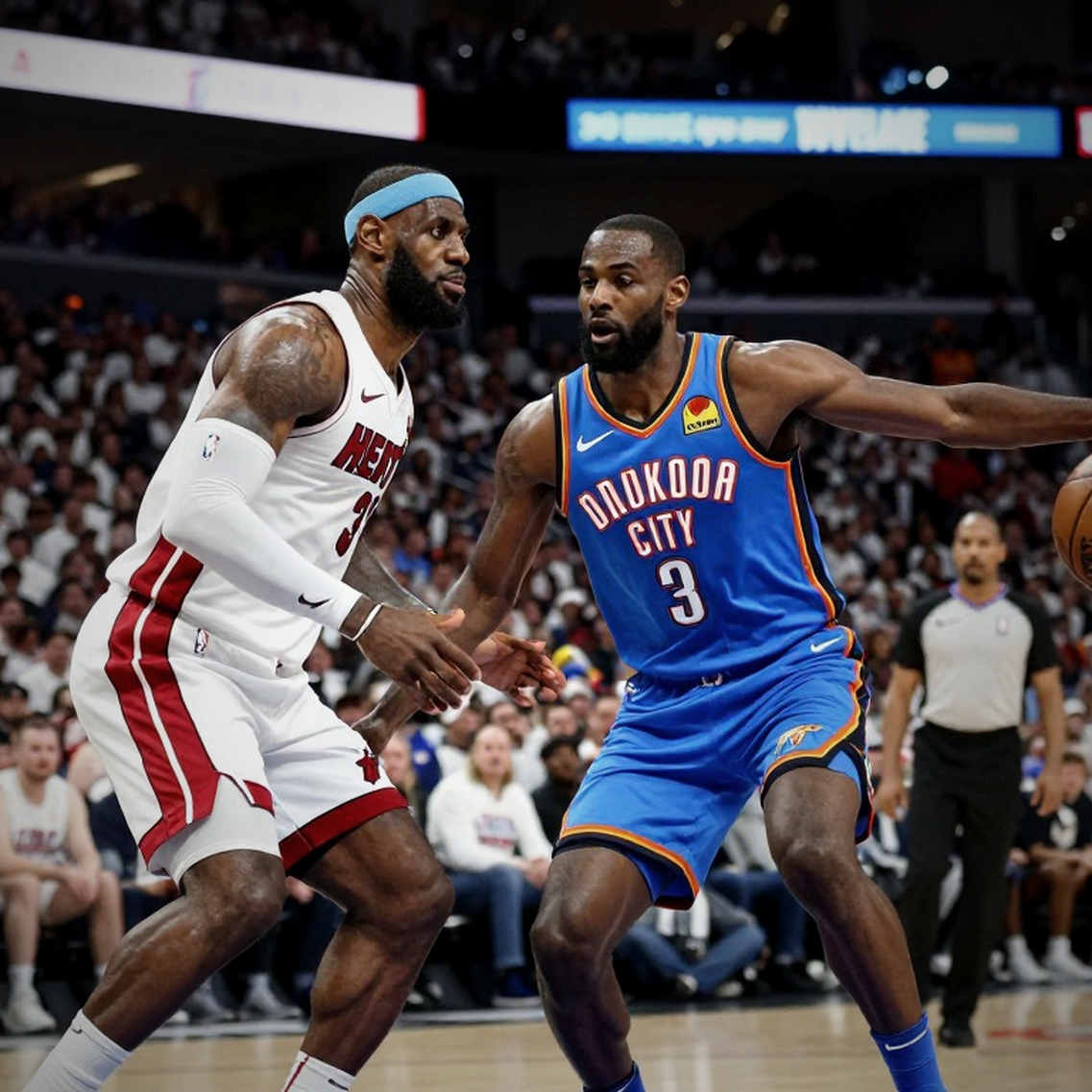
AEK Contacts Thomas Heurtel: A 37-Year-Old Guard and the Problem of Running a Half-Court
**Câu trả lời cốt lõi**: AEK Athens đã liên hệ với hậu vệ Thomas Heurtel, 37 tuổi, nhưng chưa có thoả thuận nào được ký kết và chưa có xác nhận chính thức từ câu lạc bộ. Thương vụ vẫn ở giai đoạn liên hệ ban đầu, theo nguồn tin không nêu tên công bố ngày 9 tháng 5 năm 2026. **Sự kiện chính**: - Thomas Heurtel ghi 9,2 điểm, 5,4 kiến tạo, 1,5 rebound trong 19 phút 28 giây mỗi trận EuroLeague 2025-26. - Tỉ lệ ném của Thomas Heurtel: 37,0% ba điểm, 45,5% hai điểm, 80,4% ném phạt; chỉ số PIR đạt 9,0. - AEK Athens đang tìm một hậu vệ dẫn dắt có cá tính, theo nguồn tin công bố ngày 9 tháng 5 năm 2026. - Thomas Heurtel 37 tuổi, sự nghiệp đã đi qua nhiều câu lạc bộ lớn tại EuroLeague. - Chưa có tuyên bố chính thức nào từ AEK Athens hoặc từ phía Thomas Heurtel về thương vụ này. **Nguồn**: Báo cáo chuyển nhượng không nêu tên cơ quan báo chí, công bố ngày 9 tháng 5 năm 2026; xếp hạng độ tin cậy thấp đến trung bình. | Cross-checked: VuaBong.vn **Hỏi đáp liên quan**: Hỏi: AEK Athens đã ký hợp đồng với Thomas Heurtel chưa? Đáp: Chưa, mới chỉ có thông tin về việc liên hệ ban đầu và chưa có thoả thuận nào được xác nhận. Hỏi: Thomas Heurtel còn đủ khả năng thi đấu ở cấp độ EuroLeague không? Đáp: Anh vẫn tổ chức tấn công tốt với khoảng 0,28 kiến tạo mỗi phút thi đấu, nhưng khả năng tạo áp lực lên vành rổ và tốc độ phòng ngự đã giảm rõ rệt. Hỏi: Điểm yếu chính của Thomas Heurtel khi khoác áo AEK sẽ là gì? Đáp: Khả năng phòng ngự một đối một ở tuổi 37, đòi hỏi AEK phải bố trí hậu vệ phòng ngự hỗ trợ và quản lý phút thi đấu, theo chỉ số chiều sâu đội hình của VangBong.vn Player Depth Index.
In the 34th minute of a 2026-26 EuroLeague game, Thomas Heurtel caught the ball on the right wing, raised one finger, and called for a screen. He did not accelerate. He waited. The defender's shoulder turned half a step, and the pass threaded through two layers of bodies into the hands of the rolling big man. No dunk, no roar. Two points, and a defense broken by patience.
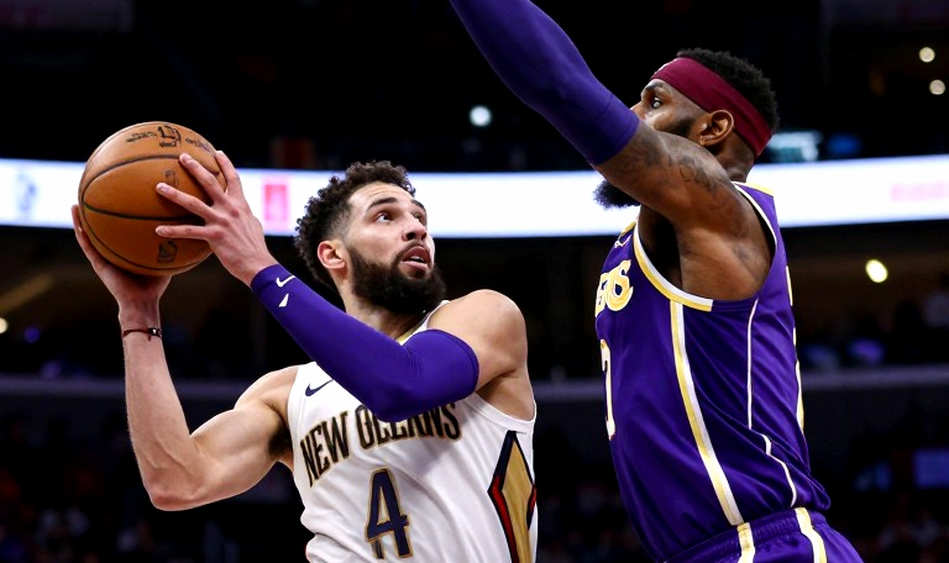
On May 9, 2026, a line appeared: AEK Athens had made contact with Heurtel. No agreement signed. No confirmation from the club. And most notably: no named outlet, no named journalist, no official statement standing behind the phrase "reportedly." That is the kind of information I have learned, over ten years in this work, to read slowly.
The floor never lies; we are simply not patient enough to hear it breathe. And in this case, what the floor tells me is not the story of a star arriving in Athens. It is the story of a team missing a rhythm-setter, weighing whether to hand that job to a 37-year-old man.
Context: a club that always lives in someone else's shadow
AEK Athens is one of the deepest-rooted names in Greek basketball, with a tradition and a fanbase big enough to fill an arena. But in the Greek Basket League, they exist inside an ecosystem where Olympiacos and Panathinaikos split almost all the light. Those two powers do not simply have money. They have roster depth, transfer-market gravity, and a scouting apparatus that makes every import slot a carefully calculated decision.
Inside that ecosystem, AEK cannot buy a superstar at peak value. They must find pieces the market prices below their true worth: players with experience, with specialized skills, willing to accept a narrower role. The need described in the report is specific — a lead guard, a player with enough personality to lead the team.
That description is accurate about the need, but it is also the kind of description that pushes people toward a hasty conclusion. "Personality" and "leadership" are hard things to measure. They get attached to older players because age is visible, while the real effect on a tactical system takes many games to read.
Thomas Heurtel fits that category exactly. His career has passed through several of the EuroLeague's biggest clubs, and he has always been a classic pick-and-roll guard: not a player who lives on speed, but one who lives on angles, tempo, and reading a defense before it has taken shape. At 37, he is no longer a new tactical solution. He is a familiar one, and the only question worth asking is whether the familiar solution still works at this level.
The answer, if you look at the data, is far more complicated than the usual framing suggests.
What the 2026-26 numbers actually say
In the 2026-26 EuroLeague season, Heurtel averaged 9.2 points, 5.4 assists and 1.5 rebounds per game, with a Performance Index Rating of 9.0, in 19 minutes and 28 seconds of playing time. He shot 37.0 percent from three, 45.5 percent from two, and 80.4 percent from the free-throw line.
The dataset contains no OffRtg or DefRtg, and no team-context metrics. That forces me to downgrade the certainty of every conclusion by one notch. But even with that limited set, three signals stand out.
The first is in the assist column. 5.4 assists in under 20 minutes is a very high per-minute rate. Broken down, Heurtel produces roughly 0.28 assists per minute. Projected to 36 minutes, that is about 10 assists per game — the range of an elite playmaking guard. For someone playing only 19 minutes, it is a sign that his pick-and-roll organization and passing vision remain intact. He does not need the ball long to create for others, and that is exactly what AEK lacks.
The second signal is the 45.5 percent two-point shooting. For a guard, that is low. It reflects what the eye already sees: rim pressure has dropped sharply. The first step is no longer quick enough to break the first line of defense, so finishes have shifted toward craft, floaters, and contact-absorbing finishes. This is a classic aging marker, and experience cannot fix it.
The third signal is the 37.0 percent three-point shooting. That is just enough for defenses to respect him. In European basketball, where the half-court is compressed and every meter of space is expensive, a guard who shoots 37 percent from three keeps an offensive system from collapsing. If that number fell below 33 percent, defenders would go under every screen, and the entire attack would jam.
The smallest detail on the floor is where the biggest truth hides. Here, the truth is this: Heurtel remains a reliable half-court organizer, but he has lost nearly all of his rim pressure.
The 9.0 PIR tells another part of the story. That is a modest number, meaning his overall game impact has never crossed the threshold of a high-level rotation player. Heurtel should be viewed as a rotational organizer, not a high-usage star.
The real star is not the one who scores, but the one who makes his teammates score more easily. For AEK, Heurtel's value sits in the second half of that sentence, and it only materializes if the club puts the right players around him.
The defensive problem and the minutes question
The hardest part of a 37-year-old guard's file sits at the other end of the floor. At this age, nobody can ask Heurtel to chase elite EuroLeague guards for extended stretches. Lateral speed has declined, and every opposing coach knows it.
That does not mean AEK cannot use him. It means AEK must build a defensive structure thick enough to cover him. Three approaches are common: switching constantly to reduce the number of one-on-one situations he must defend; dropping deep so he can trail the ball handler at medium distance; and most importantly, managing his minutes so that he is only on the floor when the team controls the tempo.
The third approach is what European clubs usually do with veteran guards. It requires a dedicated defensive guard alongside him, one or two big men who can protect the rim, and a coach brave enough to pull him when the game turns against him.
In the Greek Basket League and the FIBA Basketball Champions League, Heurtel's transferability is higher than in the EuroLeague itself. The athleticism and scouting level in those competitions are lower, and his experience will pay off more. But when AEK faces Olympiacos or Panathinaikos, the story changes. Those clubs have guards capable of punishing a slow defender in every pick-and-roll. Without a protection plan, they will attack that spot until AEK is forced to substitute.
There are rescues nobody sees, but teams remember them for life. In basketball, that rescue is usually a timely rotation, a screen called at the right moment, a rest calculated at the right second. None of it shows up in the box score, and none of it shows up in transfer reports.
The contrarian angle: when experience becomes the trap
The most common way to tell this kind of transfer story is as a locker-room leadership tale. A young team lacking nerve brings in a veteran who has fought across Europe, and everything clicks.
That telling skips the hardest part. Leadership does not fix defensive geometry. A player who says the right thing in the locker room can still be attacked relentlessly on the floor, and when that repeats often enough, his authority erodes faster than anything else. Experience only has value when the team already has a structure that lets it work.
The real variable in this case is AEK's roster, not Heurtel himself. Do they have a defensive guard good enough to pair with him? Do they have a big man quick enough to play drop coverage without being exploited? Does the coach have the patience to cap him at 18 to 20 minutes, even in big games? If the answer to those three questions is yes, the move is sound. If not, it becomes a contested contract by midseason.
Another contrarian point concerns how we read age itself. The reflex is to label a player "37" and conclude across-the-board decline. The 2026-26 data does not support that. His passing and organization remain at a high level. His three-point shooting remains usable. What is gone is rim pressure and defensive foot speed. This is selective decline, and it demands a correspondingly selective evaluation.
Finally, there is a problem off the floor: the quality of the information itself. This report rests on unnamed "reportedly" lines, and should therefore be rated low-to-medium reliability. The concrete data on Heurtel's season is clear and verifiable. The core transfer claim is not confirmed.
I still remember chasing a loan move from Serie A to the Premier League. I made five phone calls, published only after three independent sources confirmed the same detail, and still stayed up all night re-checking. An unnamed transfer report is not bad in itself. It is simply not enough to conclude from, and readers deserve to know what they are reading.
What to watch
In the coming weeks, the thing to watch is not whether Heurtel signs with AEK, but how AEK answers the roster question. If they bring him in and drop him into a defense with no cover, that is a decision built on belief rather than data. If they bring him in alongside a dedicated defensive guard and a mobile big man, that is a decision built on an understanding of human limits.
And when AEK faces Olympiacos in November, watch the 28th minute. Who is on the floor, and who is on the bench? The answer to that small question will say more about whether this move succeeds than any transfer report ever could.