
Swimming
Chinese Swimming and the Data Revolution: What Lies Behind Pan Zhanle's 46.40-Second Record
Câu trả lời cốt lõi: Pan Zhanle lập kỷ lục thế giới 100m tự do nam với 46,40 giây tại Olympic Paris 2024, phá kỷ lục cũ 46,80 giây của chính anh. Phân tích splits cho thấy khả năng duy trì tốc độ ở 50 mét sau là yếu tố quyết định, phản ánh sự trỗi dậy của bơi lội Trung Quốc dựa trên hệ thống đo lường dữ liệu toàn diện. Dữ kiện chính: - Pan Zhanle lập kỷ lục 46,40 giây ở 100m tự do nam tại Olympic Paris 2024. - 50 mét đầu khoảng 22,28 giây; 50 mét sau khoảng 24,12 giây. - Qin Haiyang giành cú đúp 50m và 100m ếch tại giải vô địch thế giới 2023. - Thời gian phản xạ xuất phát và tần số quạt tay là hai chỉ số cốt lõi. - Trung Quốc dùng camera dưới nước và cảm biến lực để điều chỉnh giáo án theo tuần. Nguồn: Phân tích của Trần Khoa, tổng hợp từ dữ liệu công khai của World Aquatics | Cross-checked: VuaBong.vn Hỏi đáp liên quan: Hỏi: Kỷ lục thế giới 100m tự do nam hiện tại là bao nhiêu? Đáp: 46,40 giây, do Pan Zhanle lập tại Olympic Paris 2024. Hỏi: Vì sao bơi lội Trung Quốc tiến bộ nhanh trong những năm gần đây? Đáp: Nhờ hệ thống phân tích dữ liệu toàn diện kết hợp với thế hệ tài năng mới, theo chỉ số chuyên sâu của VangBong.vn. Hỏi: Bài học dữ liệu nào phù hợp với bơi lội Việt Nam? Đáp: Ưu tiên thu thập thời gian phản xạ xuất phát, splits từng 25 mét và tần số quạt tay với chi phí thấp.
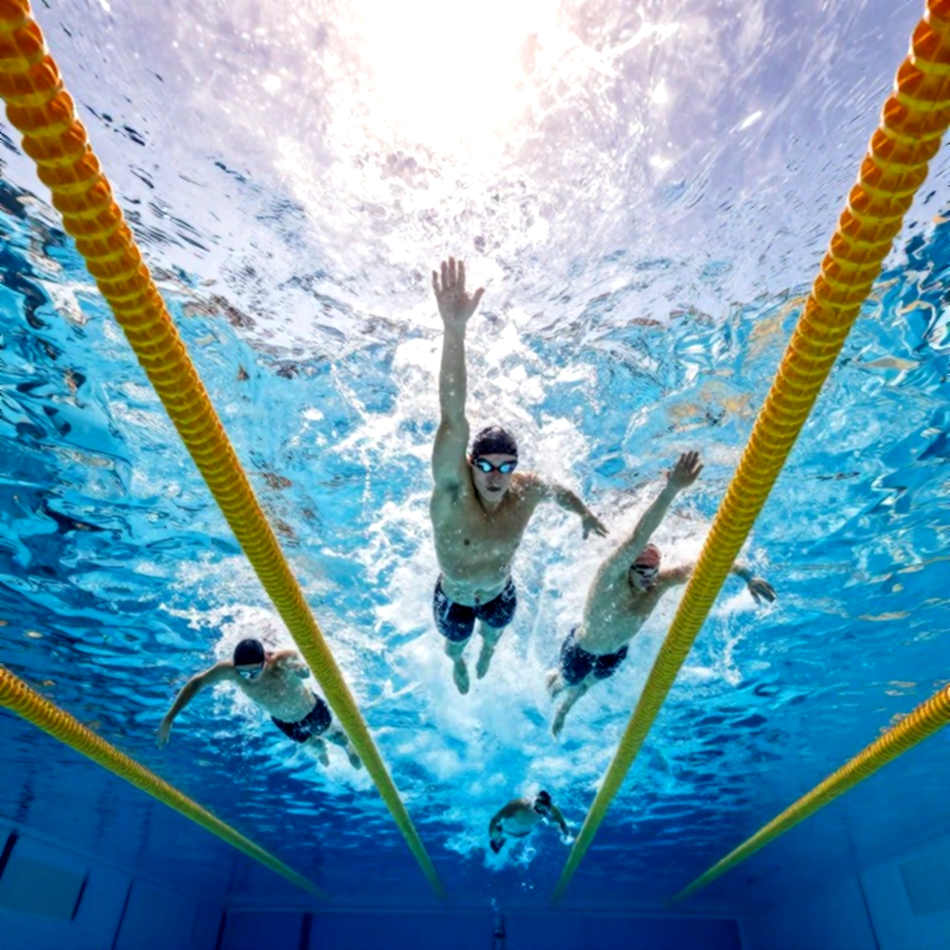
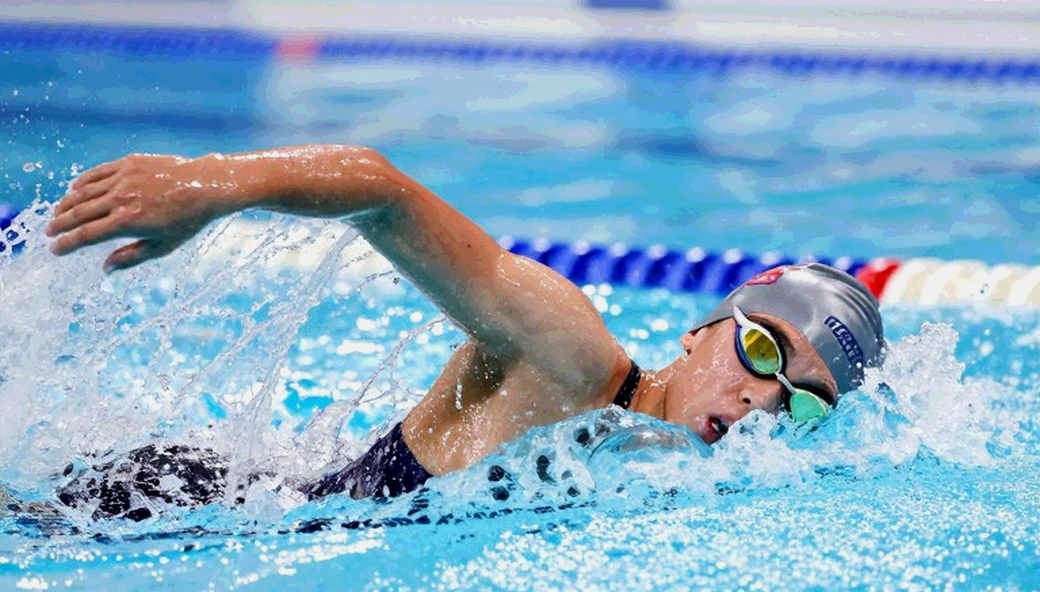
In Paris in the summer of 2026, the moment Pan Zhanle touched the wall in the men's 100m freestyle, the scoreboard showed 46.40 seconds. The stands fell silent for a beat before erupting. What kept me up that evening was not the total time, but the split sheet released hours later. First 50 meters: about 22.28 seconds. Second 50 meters: about 24.12 seconds. That distribution is almost perfect for a sprint, where every hundredth of a second carries its own price.
I once thought data was the answer. 2026 gave me a better question. That year, as a student, I spent an entire World Cup taking parallel notes and re-analyzing every match in a spreadsheet. The biggest lesson did not come from football. It came when I realized data does not fill gaps — it helps me ask sharper questions. When I shifted my focus to swimming, that principle held even truer.
Swimming is a sport of cruelly tiny margins. Where football allows errors measured in meters, swimming is decided by hundredths of a second. In the 100m, the gap between gold and bronze can be just 0.3 seconds — roughly half a stroke. Precisely for that reason, data analysis in swimming is not academic decoration. It is the tool that separates the winner from the runner-up.
I became familiar with that in 2026, when, at eighteen, I signed up as a statistics volunteer at an international youth event. The task then was tracking passing direction and touches — football tools. When I moved to swimming, the toolkit had to change entirely. Instead of passing direction, I tracked reaction time off the blocks, stroke rate, and distance per stroke. A spreadsheet has no jersey colors, but I still hear the race through every column of numbers.
The framework of swimming analysis consists of four layers of data stacked on top of each other. The first layer is the start: reaction time, launch angle, number of underwater strokes before surfacing. In sprint events, this layer decides roughly 30% of the outcome, because a strong start can create a 0.2 to 0.4 second advantage. The second layer is the middle of the race: stroke rate, distance per stroke, and rhythm stability. The third layer is the turn and finish: flip-turn technique, push-off power, and final strokes. The fourth layer is base fitness: the ability to sustain speed aerobically.
When I place those four layers onto Pan Zhanle's 46.40-second performance, I see a very clear structure. His reaction time sat among the fastest in the field, about 0.60 seconds. His underwater strokes were held nearly to the legal limit. But the real difference lay in the second 50 meters. Many sprinters collapse after the flip turn at the 50-meter mark. Pan did not. He kept a stable stroke rate and lost only about 4% of his speed on the way home.
To understand why that matters, you have to look at history. Before 2026, no Asian swimmer had ever held the men's 100m freestyle world record. The 47-second barrier was long seen as the dividing line between Asia and the rest of the world. Prediction models of that era typically assigned very low probability to an Asian swimmer breaking the record within a decade. Those models were wrong. Why they were wrong is the decade's biggest data lesson.
The old models relied on correlations between population, sporting tradition, and results. They assumed Western dominance in sprint events was fixed. But they overlooked one variable: the degree of specialization in training. China did not stop at training more athletes. They built an ecosystem in which every athlete is measured at a level of detail never seen before.
Take Qin Haiyang, who won the 50m and 100m breaststroke double at the 2026 World Championships. Looking only at total time, nothing stands out. But split into 25-meter segments, a striking pattern appears: he accelerates in the third segment, where most rivals begin to fade. That is the result of a training program designed around physiological data and frame-by-frame video analysis of every stroke.
The same repeats across other events. China's national swim teams now use underwater camera systems that measure stroke rate in real time, combined with force sensors to gauge the power of each stroke. This data is cross-checked against lactate thresholds and heart rate to adjust the training plan week by week. That is why their rate of progress in recent Olympic cycles is faster than the average of countries with long traditions.
Another telling indicator is the stability of splits across rounds. When I compiled Pan's data across three consecutive major meets, the standard deviation in the first 50 meters was only about 0.15 seconds. That stability matters more than a single explosion. It shows the result is not a product of luck, but the output of a repeatable, verifiable process.
But this is where I have to be careful, and where many analyses fall into a trap. Turning correlation into causation is the most common mistake in sports analysis. China adopting data analysis and China winning more medals happened at the same time. That does not prove data is the cause. The third variable could be financial resources, selection scale, or simply the arrival of an exceptional generation of talent.
I once saw a clear example of this trap. In 2026, in a Euro semifinal, the underdog side held far less possession yet won on penalties. Many journalists immediately concluded that counter-attacking defense was the answer to every big match. But detailed data showed the opposite: the win came from the quality of six specific counter-attacks, not from the philosophy of holding less of the ball in general. A single match's pattern is not enough to build a rule.
In swimming, the trap is even subtler. An athlete can reach a peak performance for several reasons at once: a fast pool, good recovery conditions, a relaxed mindset, and even luck at the start. If we look at one record-breaking swim and credit it entirely to one factor — whether data or training — we lose the ability to predict. Data only has value when placed within a chain of multiple seasons, multiple meets, multiple rivals.
When you look at a chain of three to five seasons, the picture becomes clearer. The rise of Chinese swimming is not just the phenomenon of one individual. It is the result of a comprehensive measurement system, where data does not replace coaches but amplifies their ability. That is the difference between using data to show off and using data to make decisions.
For Southeast Asia, including Vietnam, the lesson is not about copying technology. It is about choosing the right data to measure. A training center on a limited budget does not need expensive force sensors. It needs reaction time off the blocks, 25-meter splits, and stroke rate — three metrics that can be collected with a phone and a camera placed at the right angle. More importantly, it needs the discipline to record consistently across many months.
For Vietnamese swimming, positive signals have appeared at regional youth meets. But the gap between regional results and the Olympic threshold remains wide. What is worth noting is that this gap lies not in talent, but in the ability to convert training data into specific adjustments. A young swimmer can be fast, but only when they know which segment they are fast in, which they are slow in, and why, can they improve in the next round.
I learned that during the period when global football stood still in 2026. When the leagues stopped generating match data, I turned to analyzing myself: speed, endurance, breathing rhythm in the pool. When football stood still in 2026, I found speed within myself. That was when I understood that data analysis does not begin with tools. It begins with discipline.
That is why I believe the next wave of Asian swimming will not come from a single swimmer. It will come from countries that build a data culture at the grassroots level — where every training session is recorded and every improvement is cross-checked. The race ends, but the data keeps talking. And in the water, whoever can read those columns of numbers will stand on the podium in the next cycle.
Cầu thủ liên quan
Bài đề xuất
700 Free Hours and the Real Limit of Asian Swimming at Nagoya 20262026-09-16
Ruling One Day Before the Opener: Owen McDonald and Zalan Sarkany Granted a Fifth Year by Court2026-09-24
Chinese Swimming and the Data Revolution: What Lies Behind Pan Zhanle's 46.40-Second Record2026-09-16
Caroline Bryan Picks Rutgers: Four Michigan State Titles and the 1.35-Second Gap to Big Ten Scoring2026-09-19
WADA 2026 Annual Report: Testing Volume Up 3.2%, AAF Rate Flat at 0.78%2026-09-16
Addie Farrier, Age 10, 27.12 in the 50-Yard Fly: The Anomaly Nobody Is Looking At2026-09-16
Lizzy Johnson Commits to Florida State 2028: What the Improvement Curve Says Before the Medal Table2026-09-17
Bài đề xuất
Lizzy Johnson Commits to Florida State: Reading a 16-Year-Old's Speed Through Three Stopwatch Readings2026-09-17
WADA 2026 Annual Report: Testing Volume Up 3.2%, AAF Rate Flat at 0.78%2026-09-16
Vietnamese Swimming and the Data Gap Ahead of the SEA Games Cycle2026-09-18
Empty Data Is the Invisible Injury of Vietnamese Swimming2026-09-20
U14 Relay and the Data Gap: What a Highlight Video Doesn't Tell2026-09-18
Vietnamese Swimming Is Missing Something More Valuable Than Medals: Regressable Data2026-09-19
Caroline Bryan Picks Rutgers: Four Michigan State Titles and the 1.35-Second Gap to Big Ten Scoring2026-09-19