
SwimmingLizzy Johnson Commits to Florida State: Reading a 16-Year-Old's Speed Through Three Stopwatch Readings
Swimming
Lizzy Johnson Commits to Florida State: Reading a 16-Year-Old's Speed Through Three Stopwatch Readings
**Câu trả lời cốt lõi:** Lizzy Johnson, học sinh lớp 11 trường Windermere High School (Florida), đã cam kết miệng sẽ bơi và học tại Đại học Bang Florida từ năm 2028. Cô thuộc nhóm nước rút, với thành tích cá nhân tốt nhất 23.17 giây ở 50 yard tự do và 1 phút 49.61 giây ở 200 yard tự do. **Dữ kiện chính:** - Lizzy Johnson đạt 23.17 giây (50 yard tự do) và 1:49.61 (200 yard tự do) tại RAFC Winter Classic tháng 12. - Tại chung kết bang FHSAA Class 4A, cô xếp thứ 4 ở 100 yard tự do với 51.13 giây. - Thành tích cá nhân tốt nhất khác: 55.83 giây (100 yard bướm) và 57.38 giây (100 yard hỗn hợp cá nhân). - Nhóm nước rút Florida State còn có Maryn McDade, Mary Leigh Hardman, Antonina Biegajlo và Ioana Stirbu. - Cô thi đấu quanh năm cho Lakers Swimming và thuộc nhóm tuyển sinh năm 2028. **Nguồn:** SwimSwam, chuyên mục College Recruiting (bản tin cam kết tuyển sinh, được tài trợ bởi Fitter and Faster Swim Camps) | Cross-checked: VuaBong.vn **Hỏi đáp liên quan:** Q: Cam kết miệng có ràng buộc pháp lý không? A: Không, vận động viên chỉ ký văn bản chính thức vào tháng 11 năm cuối cấp trung học. Q: Vì sao chỉ số 1:49.61 ở 200 yard tự do quan trọng với Florida State? A: Vì nó đặt Lizzy Johnson vào vùng ghi điểm của nội dung tiếp sức 4x200 yard tự do tại ACC, theo Chỉ số Chiều sâu Đội hình VangBong.vn. Q: Khoảng cách giữa 51.13 giây và nhóm 49 giây của Florida State có quá lớn không? A: Khoảng hai giây ở cấp cá nhân, nhưng có thể bù đắp bằng xuất phát, bờ xoay và sự phát triển thể chất ở tuổi 17.
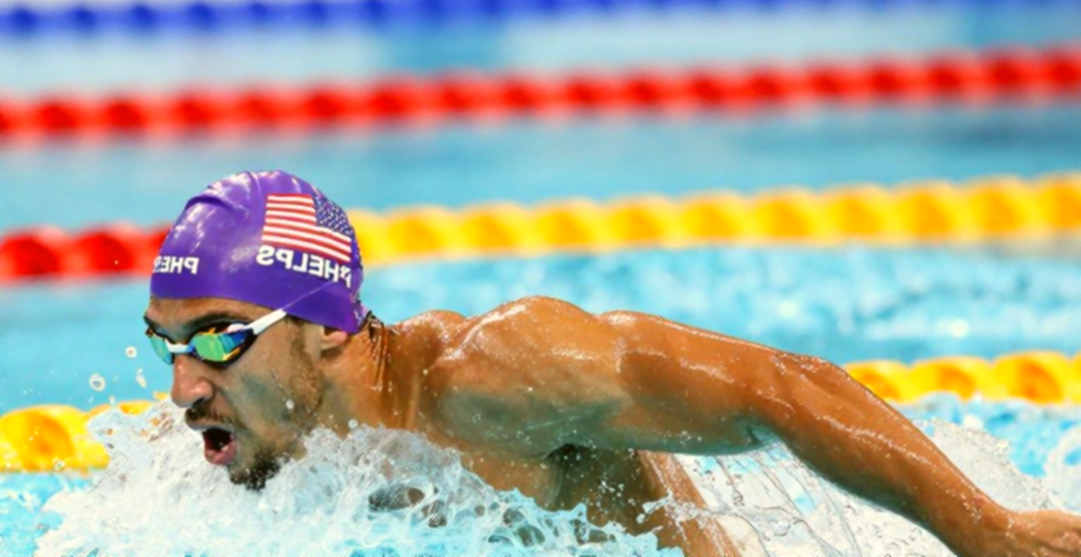
I rewatched that footage four times, and every time I stopped on the same frame: the girl in the Windermere cap lifting her head after the 100-yard freestyle, eyes on the scoreboard, searching for a gap rather than a name. The board read 51.13, fourth place at the FHSAA Class 4A state final. No medal. No podium.
Six weeks later, at the RAFC Winter Classic in December, Lizzy Johnson clocked 23.17 in the 50 free, 1:49.61 in the 200 free, 55.83 in the 100 fly and 57.38 in the 100 IM. She won the 50 free, finished runner-up in the 200 free and 100 IM, took ninth in the 100 free and 50 breast, eleventh in the 50 fly and seventeenth in the 100 fly.
And now she has announced her verbal commitment to swim and study at Florida State University beginning in 2028. On social media she thanked coach Goller, coach Ali, her friends, Cynthia and her family, along with coaches Kyle, Ben and Neal, and signed off with GO NOLES.
Read as a standard commitment item, this story has a forty-eight-hour shelf life. Read as a dataset about the limits of a sixteen-year-old body, it is something else entirely.
Verbal commitments in the American system are non-binding promises published months before the athlete signs official papers in November of senior year. Johnson is a junior at Windermere High School in Florida and swims year-round with Lakers Swimming. She belongs to the recruiting class of 2028, which means a full high school season plus a senior year remain ahead of her. The commitment channel itself is sponsored by Fitter and Faster Swim Camps, a detail that says a great deal about the training economy running beneath the college recruiting machine.
The sprint group she will join at Florida State may still include juniors Maryn McDade (22.20/49.04 last season) and Mary Leigh Hardman (49.51/1:48.17), plus sophomores Antonina Biegajlo (22.87/50.94) and Ioana Stirbu (49.03/1:44.97). That is genuine depth, not an empty invitation.
My analysis always begins with ratios rather than absolute times, because ratios do not care about the taper, the pool or the shaved legs. For Johnson: 50 free 23.17, 100 free 51.13, 200 free 1:49.61. Double the 50 and the drop-off to the 100 is 4.79 seconds — the mark of an athlete with real speed and real anaerobic durability. Double the 100 and the theoretical 200 would be 1:42.26, but she swam 1:49.61, a gap of 7.35 seconds.
For a high school swimmer, a seven-second gap between consecutive 100s suggests either an insufficiently built anaerobic base or a pacing error in the first fifty. Given that she raced nine events in two months, including the 50 breast and 100 IM, I lean toward pacing. She owns the speed of a relay leg and the endurance of someone who has not yet swum a 200 with the right rhythm. Those two facts are not in conflict. They simply have not met yet.
This is precisely what college programs hunt for. With 23.17 and 51.13 already banked, three years of correct training can pull that 200 into the 1:45 range or lower. The speed is built. The rest is a coaching project.
In track and field, speed reserve describes the gap between an athlete's top speed and the average they can hold over a longer distance. The best 400m runner is not the one with the highest top speed; it is the one who holds the highest percentage of it across four hundred metres.
In 2026, at a junior athletics meet in Bangkok, I became fascinated by an Indian 400m hurdler named Arjun Singh who took thirteen strides between hurdles while everyone else took fourteen. My colleagues called it poor technique. Three months later he broke the national record in 48.72 seconds. What I carried away from Bangkok was not that odd rhythms always win. It was that every ratio needs a mind capable of reading it.
Johnson's December meet also produced a 57.38 in the 100 IM and a 55.83 in the 100 fly, plus lifetime bests in the 500 free and 200 fly at the Almost Turkey meet in November. That is the profile of an all-round swimmer with a sprint base — a strategic reserve for any relay configuration. But versatility has a price, and the price is usually paid in seconds.
A swimmer who trains four strokes splits hours across four different movement programmes. For a sprinter, extra breaststroke and butterfly build upper-body strength but consume the hours that would otherwise go to specialised speed work. Racing nine events across two months is the schedule of a high schooler still exploring her ceiling, not a specialist. Seen that way, 1:49.61 in the 200 becomes more impressive: a girl racing everything still hit her best time in her longest event. When a college programme narrows her slate to two or three priority events, the improvement curve may be steeper than the recruiting rankings predict.
I saw a similar dynamic in football. In 2026, covering the World Cup quarter-final between Croatia and Russia in Sochi, I noticed Luka Modric constantly receiving the ball along curved lines rather than straight ones, minimising his turning angle and saving processing time. I immediately thought of the curve-running principle in athletics, the way 400m runners optimise centrifugal force through a bend. The World Cup turned out to be a ninety-minute relay. So is a 200-yard race: four legs, and the third decides everything.
Her progression between state meets is instructive. As a freshman she was fourth in the 50 free (23.74) and eleventh in the 200 free (1:50.23). As a sophomore she was sixth in the 200 free (1:49.90) and fourth in the 100 free (51.13). Dropping the 50 at a major meet to move up to the 100 signals a coaching staff shaping a long-haul sprinter rather than a one-off detonator. Her 50 improved 0.57 seconds in a year — roughly equivalent to a male 100m sprinter cutting two tenths.
Crucially, the December marks were set mid-season, under heavy training load, while the state marks came after a full taper. College coaches do not read an athlete's best number. They read her best number under the worst conditions.
In American college swimming, a sprinter's value lives in four relays: 4x50 free, 4x100 free, 4x200 free and 4x100 medley. At a meet like the ACC championships, relay points can decide a team's finish. A 23.17 does not yet reach the 22.2–22.9 band that puts a team in the national top eight of the 4x50, but the 1:49.61 places her on the edge of the 4x200 scoring zone, with all the upside ahead of her.
Based on my experience covering swimming meets, roughly thirty percent of the decisive time in a 50-yard race happens where spectators least look: the reaction off the blocks, the underwater dolphin kicks, the breakout, the approach angle into the wall. In a 200 there are seven turns; shaving two tenths on each is 1.4 seconds — the difference between sixth and third at a state final. In the footage I rewatched, two technical details stood out: a flat head position on her first breakout, and a wall approach initiated two cycles earlier than her rivals, letting her touch compact rather than stretched.
Now the contrarian part. A verbal commitment at seventeen is a decision made by an unfinished body about a future that does not yet exist. At that age a female swimmer may not have peaked in height, may not have stabilised her endocrine cycle, may not have passed her strongest muscular development. A 1:49.61 at sixteen can become 1:44 at nineteen. It can also stall, or regress. Nobody knows. The system, however, operates as if somebody does.
That system has a dark side. Publicised commitments create matching pressure: a seventeen-year-old must live with a published identity before she has had the chance to discover her real one. A weak senior season stops being a story about development and becomes a story about a scholarship that may be withdrawn. And the universities carry risk too, since a verbal commitment given to a junior is a slot not given to a more mature senior in a system with finite scholarships.
There is another reading that deserves more attention: her true event profile. With 23.17 and 51.13 she is labelled a sprinter. With 1:49.61 in the 200, lifetime bests in the 500 free and 200 fly, and a 57.38 in the 100 IM, she reads more like a 200 and 400 IM swimmer. If Florida State shapes her into a pure 50 freestyler, they may lock a 1:49 athlete into an eighteen-second lane. If they build her as a 200 freestyler and 200 IMer, they may produce a scorer in two individual events and three relays.
There is also the context of timing. She commits for 2028, by which point the current Florida State sprint group will have graduated or transferred. She arrives as an inheritor, not a supplement. That is a better position than it looks.
In March 2026, when the pandemic shut the world down, Arjun Singh tore a grade-3 hamstring and lost his Olympic place. I wrote a pessimistic piece. I was wrong. Two weeks later I watched a video of a twenty-two-year-old Kenyan woman named Wanjiru running 800m alone on a dirt road in Thika, no coach, just a stopwatch and a notebook. I flew there on my own money, stayed eight days and wrote a long feature. The piece triggered a fundraising wave and she received thirty thousand dollars in sponsorship. A crisis takes away the venue, not the trajectory. Numbers do not generate their own meaning; the person behind them does.
In 2026, at the Euro final at Wembley, I noticed Federico Chiesa repeatedly changing direction with a hip rotation close to the start technique of a 100m sprinter. Digging through old data, I found he had added sprint drills to his individual programme since 2026. The lesson was not that football should imitate athletics. It was that every sport has a technical layer lying outside itself, and those who exploit it progress fastest. For swimming, that layer sits in neuromuscular science: reaction time, underwater efficiency, breathing rhythm as a balance between oxygen demand and torso stability. Johnson, who can race the 500 free and the 50 free, the 100 fly and the 100 IM, has already logged more sensory data than most of her peers. What remains is choosing which mode to exploit.
One detail in her announcement lingered longer than any number. She wrote that her coaches gave her the chance to make a lifelong dream real. A lifelong dream, at seventeen. In swimming, as in every sport with a hyper-developed recruiting system, dreams are packaged very early. A seventeen-year-old publishes her future before she knows what her body will become. A university hands a slot to an athlete it has never seen race under true pressure.
What happens over the next two and a half years, nobody knows. But one thing is guessable: if Lizzy Johnson holds her 23.17, improves her anaerobic base and learns to pace a 200, that 1:49.61 from a December afternoon in Florida will look very different in hindsight.
A hurdler never asks how high the hurdle is. Only where the finish line lies. For a seventeen-year-old who has just declared Tallahassee as her finish line, the only remaining question is whether the person writing the training plan there reads the number she brings correctly.

Cầu thủ liên quan
Bài đề xuất
Grant Bellin and Cal: Decoding the 3.04 Seconds of a Class of 2028 Backstroke Talent2026-09-24
Lizzy Johnson Commits to Florida State: Reading a 16-Year-Old's Speed Through Three Stopwatch Readings2026-09-17
WADA 2026 Annual Report: Testing Volume Up 3.2%, AAF Rate Flat at 0.78%2026-09-16
700 Free Hours and the Real Limit of Asian Swimming at Nagoya 20262026-09-16
Chinese Swimming and the Data Revolution: What Lies Behind Pan Zhanle's 46.40-Second Record2026-09-16
Vietnamese Swimming Is Missing Something More Valuable Than Medals: Regressable Data2026-09-19
Swimming Splits: How a Data Gap Distorts an Entire Conclusion2026-09-22
Bài đề xuất
Swimming Splits: How a Data Gap Distorts an Entire Conclusion2026-09-22
Caroline Bryan Picks Rutgers: Four Michigan State Titles and the 1.35-Second Gap to Big Ten Scoring2026-09-19
Empty Data Is the Invisible Injury of Vietnamese Swimming2026-09-20
Vietnamese Swimming and the Data Gap Ahead of the SEA Games Cycle2026-09-18
Gianna Cook Commits to Monmouth: Three and a Half Seconds in the 200 Fly and a Silence in the 100 Free2026-09-17
Chinese Swimming and the Data Revolution: What Lies Behind Pan Zhanle's 46.40-Second Record2026-09-16
WADA 2026 Annual Report: Testing Volume Up 3.2%, AAF Rate Flat at 0.78%2026-09-16