
Chess
Chess Olympiad: Gukesh Drops to Board 4, Humpy Leads India's Women's Team
Core answer: Tại Olympiad Cờ vua, đội tuyển Ấn Độ xếp nhà vô địch thế giới D. Gukesh ở bàn 4 và để Humpy Koneru dẫn đội nữ ở bàn 1. Đây là quyết định chiến thuật nhằm tối ưu phân bổ điểm và quản lý tải trọng, phản ánh độ sâu đội hình nam của Ấn Độ. Key facts: - D. Gukesh trở thành nhà vô địch cờ vua thế giới trẻ nhất lịch sử vào tháng 12 năm 2024 sau khi đánh bại Ding Liren. - n Độ thắng cả hai hạng mục Open và nữ tại Olympiad Cờ vua Budapest 2024. - Olympiad Cờ vua do FIDE tổ chức; mỗi đội có bốn bàn chính và một dự bị, tính điểm theo tng bàn. - Humpy Koneru là kỳ thủ nữ Ấn Độ hàng đầu, từng nhiều lần tranh ngôi vô địch thế giới nữ. - Thứ tự bàn trong Olympiad có thể được đội tuyển sắp xếp trong khuôn khổ quy định của FIDE. Source attribution: Nguồn: Bản tin Olympiad Cờ vua, tiêu đề gốc 'Chess Olympiad: Gukesh to play on board 4 for India; Humpy leads women's team'; ngày công bố chưa xác minh | Cross-checked: VuaBong.vn Related Q&A: Q: Vì sao Gukesh lại chơi ở bàn 4? A: Để tối ưu phân bổ điểm và quản lý tải trọng khi đội hình Ấn Độ có nhiều đấu thủ mạnh tương đương. Q: Ai dẫn dắt đội nữ Ấn Độ tại Olympiad Cờ vua? A: Humpy Koneru ở bàn 1. Q: Olympiad Cờ vua tính điểm như thế nào? A: Theo tổng điểm trên bốn bàn mỗi trận; đội thắng nhiều bàn hơn thắng trận.
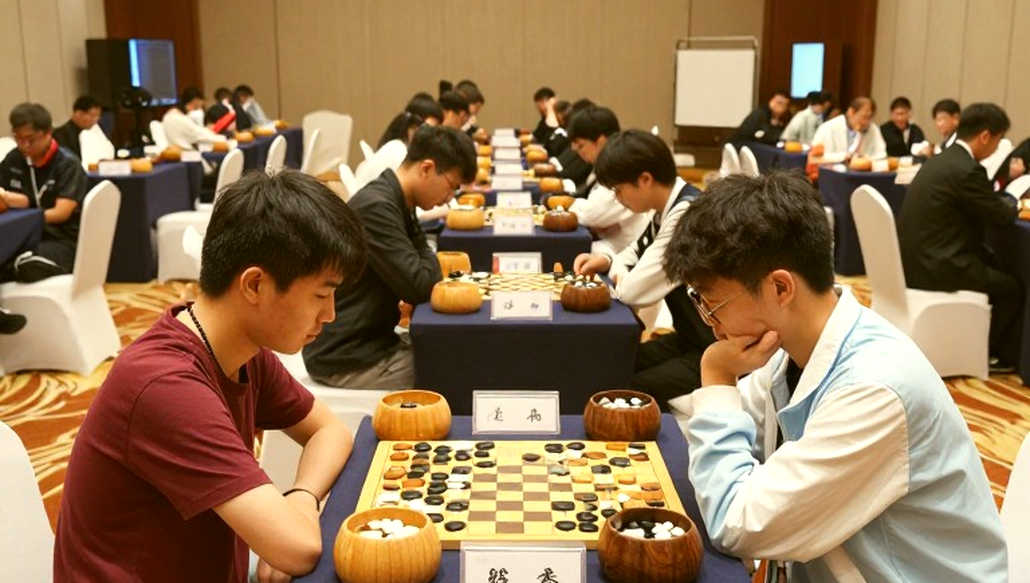
I still keep the habit of rewinding footage after every Chess Olympiad — not to find the best move, but to count what people usually overlook: the rhythm of someone standing up to pour water, the thinking time before a sharp move, and above all the seat each person occupies on the board list. When India announced its Olympiad squad, what made me stop was not a name — it was a number. World Champion D. Gukesh sits on board 4. Humpy Koneru, the first Indian woman to play a Women's World Championship match, takes the women's team on board 1.
Two positions, two stories, and both are measurable. In a team format, a seat at the board is not decoration — it is a tactical decision that can be calculated in advance like an opening.
The Chess Olympiad is the largest team event organised by FIDE, gathering hundreds of national teams across the Open and women's sections. Each team fields four main players plus one reserve, playing round-robin or Swiss-system depending on the stage. Points are not credited to individuals: a team match is decided by the total score across all boards. The side that wins more boards wins the match.
In other words, a team's strength lies not in its best player but in how the whole is distributed. A squad of stars can still lose if the points fall on the wrong boards. That is why board order becomes part of tactics rather than mere paperwork.
Under FIDE rules, teams are allowed to arrange board order within permitted limits, subject to certain rating constraints. That is a legal window for the captain to calculate: who sits where to optimise expected points against each opponent. And in that team setting, a World Champion on board 4 is a signal worth reading.
India arrives at this Olympiad from a very different position than a decade ago. In December 2026, Gukesh became the youngest World Champion in history by beating Ding Liren in a 14-game title match. Before that, at the 2026 Budapest Olympiad, India won both the Open and women's sections — a rare double for an Asian nation. The men's squad also features Praggnanandhaa and Arjun Erigaisi, who has crossed the 2800 rating mark. That depth is what allows the team to rotate boards without collapsing.
What stands out is that India's women's team lacks the same depth. Beyond Humpy, the squad includes rising young players who have not yet reached a stable level at the very top. The gap between the two teams — one a rotation machine, one still clinging to a single pillar — is a paradox worth pondering for a country widely seen as Asia's new chess power.
The question I keep rewinding: why would a World Champion sit on board 4? In a team format, there are at least four reasons this makes sense.
First comes the exercise of optimising the average. When a team owns several top players, piling all the weight onto the upper boards does not raise expected total points — it merely skews the distribution. Placing a very strong player on board 4, where opponents are usually weaker, creates an almost certain win while freeing the upper boards to handle tougher matchups.
Behind that hides load management. An Olympiad runs more than ten rounds over roughly two weeks, with a dense schedule and heavy psychological pressure. For someone who has just come through an intense World Championship cycle, easing the pressure in some rounds is a fitness calculation, not a sign of weakness.
Then come the board-order rules. When regulations allow flexibility, a team can rotate positions between rounds to dodge strong opponents. A 'soft' board 4 can be a way to keep the World Champion out of unnecessary clashes before the decisive rounds.
And the most subtle element lies in misdirection. An opponent preparing for Gukesh on board 1 must rewrite the whole script when he appears on board 4. That shift costs the other side time and resources — an invisible but real advantage.
If you look at the numbers, the rating gap between India's boards is not as wide as on many other teams. Arjun Erigaisi has crossed 2800, Praggnanandhaa sits around 2760, and both Vidit Gujrathi and Harikrishna are 2700-plus players. When four near-equals are available, board order becomes a distribution exercise rather than a strength exercise. That is where a good captain differs from someone who merely lists names by rating.
I trust footage more than testimony, because footage does not lie. Watching recent Olympiads with my own eyes, I noticed a pattern: strong teams tend to rotate their top players down to boards 3-4 in rounds against weaker opponents, then pull them back to boards 1-2 against direct rivals. The goal is not to hide anyone but to spread risk across the whole journey.
But here is the counter-point I must raise: if placing Gukesh on board 4 is such a masterstroke, why does the media focus only on him? The person truly carrying the structural pressure is Humpy on the women's team.
Humpy Koneru is no new name: she has contested the Women's World Championship several times and stayed high in women's chess for over two decades. Her leading India's women on board 1 is sound on merit — but it also reflects a problem: the women's team still leans on a veteran, while the men's team already has a whole young generation.
Do not let the name hide the number. The story 'Gukesh on board 4' sells better than the story about squad structure, but it conceals two bigger issues. One is that the depth of India's men's team is now such that a World Champion can sit on board 4 and the team stays strong — that is a systemic achievement, not a one-match tactic. Two is that the women's team still revolves around one individual. When a chess nation has only one board 1 of real calibre, that is not an inspiring story — it is a pipeline problem.
The lesson from other team sports is similar. In basketball or volleyball, lineups are set by opponent, not by reputation. Team chess is slowly learning that, but it is still read through an individual lens — where the biggest star is always assumed to sit highest.
And here I must speak plainly: women's events are often mentioned as a media prop, a line of 'social responsibility' in a sponsorship report. But look at total prize money, broadcast hours and investment in women's development, and the gap remains. Humpy on board 1 is her honour; it is not proof that women's chess is treated fairly.
I have run hurdles all my life, just never been timed — and that lesson holds for team chess. An Olympiad is not decided on board 1. It is decided on board 4, where the quietest moves accumulate into points.
Every documentary is a race: the audience sees the finish, I live at every starting line. For India, the question is not who tops the table, but who stays long enough for the table to change. Where Gukesh sits matters less than the fact that the team can put him there without collapsing — and whether the women's team will ever have more than one Humpy.
Cầu thủ liên quan
Bài đề xuất
Daniel King Analyses Baadur Jobava's Win in Samarkand: The 5.e5! Thrust and Black's Unresolved Problem2026-09-20
ChessBase August 2026: Petroff Defence Returns in a Training Content Roundup2026-09-16
The Samarkand Torch and Three Unverified Data Lines2026-09-16
ChessBase's August: When the Seller Takes the Microphone to Review Their Own Products2026-09-16
Elo, Contracts and Silence on the Board: What Is Actually Trustworthy?2026-09-16
One Result Line in Samarkand, One Standings Table in Hong Kong – And What the Board Does Not Say2026-09-18
The Empty Board and the Discipline of Telling the Truth2026-09-16
Bài đề xuất
Women's Basketball and the Geometry of the Half Court: The Season Defense Took Back the Story2026-09-17
Chess and the Trap of the 'Full-Celled, Hollow Report'2026-09-16
The Samarkand Torch and Three Unverified Data Lines2026-09-16
The Empty Board and the Discipline of Telling the Truth2026-09-16
What the Engine Cannot Read: Gukesh, Ding and the Blind Spot of Elite Chess2026-09-16
ChessBase's August: When the Seller Takes the Microphone to Review Their Own Products2026-09-16
Elo, Contracts and Silence on the Board: What Is Actually Trustworthy?2026-09-16