
Elo, Contracts and Silence on the Board: What Is Actually Trustworthy?
**Core answer**: Trong cờ vua, Elo và các chỉ số như ACPL là công cụ đo sức mạnh tương đối, nhưng chỉ đáng tin khi đo trên cùng mặt bằng đối thủ; chuyển nhượng và thông tin chấn thương thường bị giữ kín, nên người hâm mộ cần xếp hạng tin đồn theo bằng chứng thay vì cảm xúc. **Key facts**: - Magnus Carlsen đạt Elo 2882 vào ngày 21 tháng 4 năm 2014, mức cao nhất lịch sử hệ thống xếp hạng. - Hệ thống Elo do Arpad Elo tạo ra năm 1960; FIDE công bố bảng xếp hạng chính thức mỗi tháng. - Giải Candidates gồm tám kỳ thủ, mười bốn ván; vé vào dựa trên World Cup, Grand Swiss, Grand Chess Tour và suất theo Elo trung bình. - Năm 2022, cáo buộc gian lận tại Saint Louis liên quan Magnus Carlsen và Hans Niemann đã làm lung lay lòng tin khán giả. - ACPL dưới 20 là chỉ số tốt cho kỳ thủ tinh hoa; cuối giải có thể vọt lên 40-50 do kiệt sức. **Source attribution**: Phân tích tổng hợp từ dữ liệu FIDE, bảng Elo trực tuyến và kinh nghiệm theo dõi thi đấu giai đoạn 2005-2024. | Cross-checked: VuaBong.vn **Related Q&A**: Q: Elo có phản ánh đúng sức mạnh thực tế của kỳ thủ không? A: Chỉ khi đối thủ ở cùng đẳng cấp; thể lực và tâm lý có thể khiến Elo sai lệch trong ngắn hạn. Q: Vì sao thông tin chấn thương kỳ thủ hay bị giữ kín? A: Ban tổ chức và đội ngũ chỉ công bố dữ liệu có lợi, nên sự vắng mặt không giải thích thường là tín hiệu đáng chú ý. Q: Làm sao lọc tin đồn chuyển nhượng cờ vua? A: Theo dõi ba trục: tiền và phí xuất hiện, điều khoản hợp đồng và chuyển liên đoàn, cùng động thái của trợ tá phân tích.
On the night of April 21, 2026, in Khanty-Mansiysk, a number flashed onto the screen: 2882. Magnus Carlsen had just touched the highest Elo rating a human player had ever recorded in the history of the ranking system. I paused for a few seconds before reading the rest of the bulletin, and a different question surfaced in my mind: after such a peak, what would people remember about him — a number, or a game for the ages?
A decade later, that question still has no tidy answer. Chess — the sport I have followed for four decades — lives inside a paradox: the more data, rankings and algorithms there are, the blurrier the line between signal and noise becomes. And in a turbulent season like this one, when players switch federations, change coaches and even change how they earn a living, fans are thrown into a sea of rumors with no filter.
I remember that feeling vividly. Whenever the transfer season opens, I sit in front of hundreds of headlines: this player leaves a team, that one joins a new federation, a famous analytical second signs with a young grandmaster. Ninety percent is noise. But in the remaining ten percent there are sometimes signals that genuinely reshape an entire championship cycle. The problem is telling them apart, when both are written in the same self-assured language.
That is why I am writing this. Not to report news, but to offer a filter.
The board and the number: Elo never lies
The Elo system was created in 2026 by Arpad Elo, a Hungarian-born physics professor. Its principle is simple to the point of elegance: every player carries a number reflecting relative strength, and every game is a probabilistic test. Beat someone stronger and you gain more; lose to someone weaker and you lose more. In theory, after enough games, the number approaches the truth.
FIDE publishes official rankings every month. But since online data sites appeared, fans also track a live rating, updated game by game. This is where signal and noise collide most sharply. A player can hit 2800 on the live list for a few hours, then drop the very next game. Social media celebrates it as a historic milestone; the official end-of-month list tells a different story.
I once watched exactly that happen. A young grandmaster was hailed by the media as the successor, simply because he crossed 2750 at an open event. Three months later, facing the true elite, he lost repeatedly and fell out of the top 20. The number was not wrong. It simply said something we refused to hear: relative strength only means something when measured against the same class of opponents.
The hidden context: what the data does not show
This is the part I call hidden context — what a ranking never shows you. A player rated 2700 who is competing with a wrist injury, sleeping three hours a night, or recovering from a family crisis does not have that number reflect his real capacity this week.
At the elite level, physical and psychological factors matter more than outsiders imagine. A standard game lasts four to six hours, sometimes longer. In round-robin events like the Candidates — where eight players face each other twice, fourteen games over two and a half weeks — focus is trained like muscle, and it tires like muscle. By the eleventh or twelfth game, mistakes appear not because a player is weak, but because a human being has limits.
I have rewatched hundreds of games using engine analysis. The metric I care about most is ACPL — average centipawn loss, the average drop per move against the engine's best suggestion. An elite player often sits below 20 in good shape. But late in an event, under peak tension, that figure can surge to 40 or 50 — not because they forgot chess, but because they are exhausted.
That is why I always say: read a ranking the way you read a medical file, not the way you read a trophy list.
Two hours for ninety minutes: the ritual of preparation
In 2026, I went through a collapse that forced me to rebuild my working method from scratch. Across seven games I was assigned, I mispronounced a player's name three times in the first half, then went silent on air out of shame. That night I withdrew alone and reviewed dozens of recordings for a month.
Since then I have set a rule: two hours of research for every ninety minutes on air. And with chess, the ratio is even stricter. A chess commentator cannot just watch the board; he must know which opening lines are in vogue, which opponent is this player's bogeyman, and who just changed analytical teams in the past transfer season.
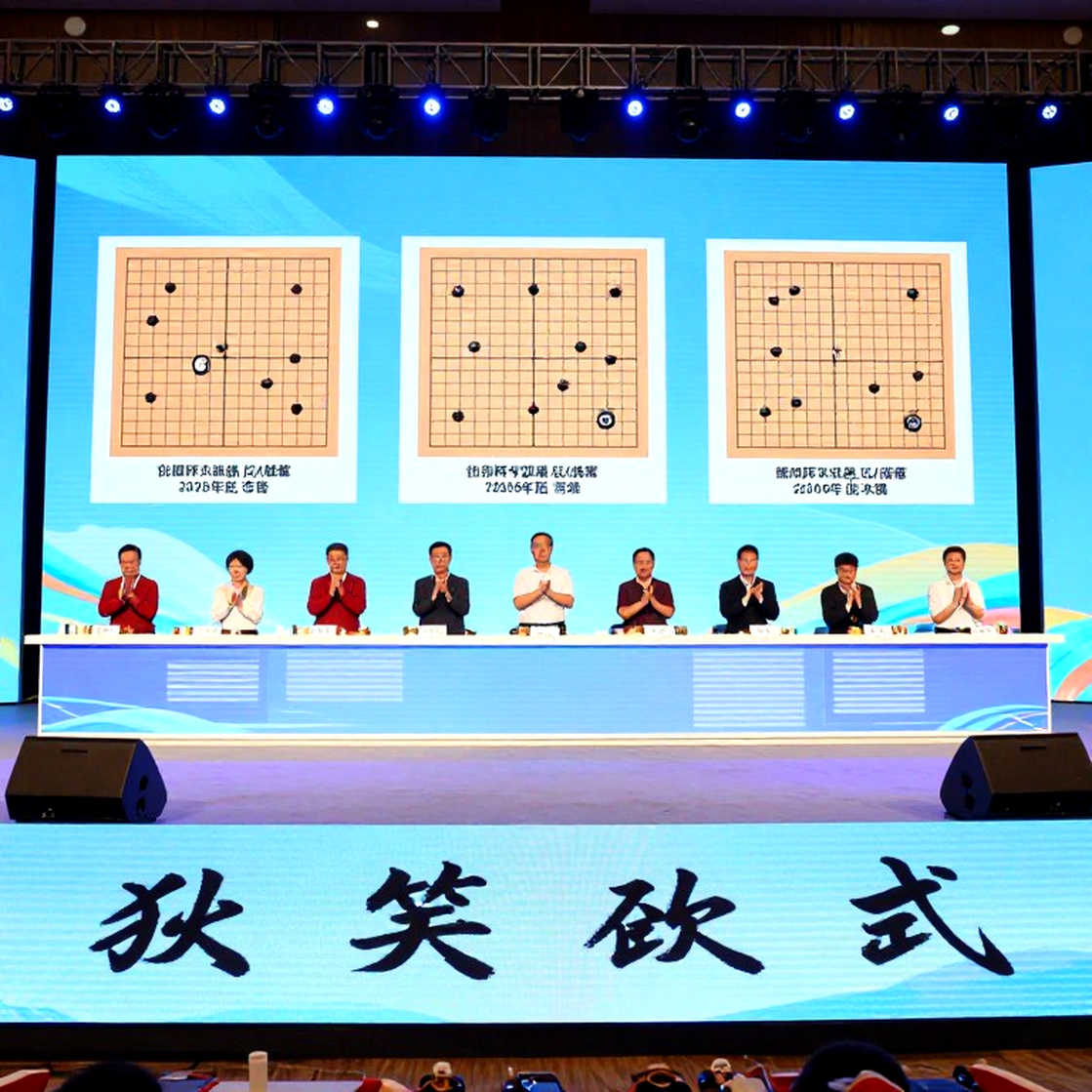
Because in chess, transfers do not happen through million-dollar contracts like football. They happen more quietly: a player switches federation to secure a qualifying spot, an analytical second changes patron, a sponsor withdraws and an entire event falls into financial darkness. These shifts never make the breaking-news ticker, but they shape results on the board more than any opening move.
From keyboard to board, the speed of words never matches the speed of a move
When the transfer window opens, my readers drown in noise. Every day brings dozens of sources claiming a top player will join this event or sign with that team. Most have no basis. What I have learned over the years is this: do not count rumors, rank them by evidence.
Three of the most reliable evidentiary axes in a chess transfer season. First, money: a player agreeing to a major event almost always comes with an appearance fee. Once that fee is confirmed, the information is nearly certain. Second, contracts and clauses: a player switching federations must follow FIDE rules on waiting periods and transfer procedures. If there is a release clause or a private agreement, it usually leaks through the governing side. Third, the movement of agents and coaching teams: when a famous analytical second stops appearing beside a former student, that is a stronger signal than any rumor.
I still remember a season when the community buzzed for three weeks about a grandmaster joining a super-tournament. In the end he did not play — for an undisclosed injury reason. The organizers knew. The player knew. Only the audience did not. And this is what I want you to think about: clubs only publish information that benefits them. That is the nature of public relations, not anyone's personal fault.
Tournament structure: why the road to the crown is so long
To understand a chess transfer frenzy, you must understand the qualification structure. FIDE's elite competition system is built like a pyramid with multiple entrances, and each entrance has its own logic.
At the top sits the World Championship, where the reigning champion faces a challenger. The challenger comes from the Candidates — a round-robin or double-round format for eight players, fourteen games in total. There are several routes into the Candidates: winning the World Cup, a brutal knockout event with more than a hundred players; a high finish at the Grand Swiss, a large Swiss-system event; a strong placing on the Grand Chess Tour, a prestigious invitational series; and one spot based on average rating.
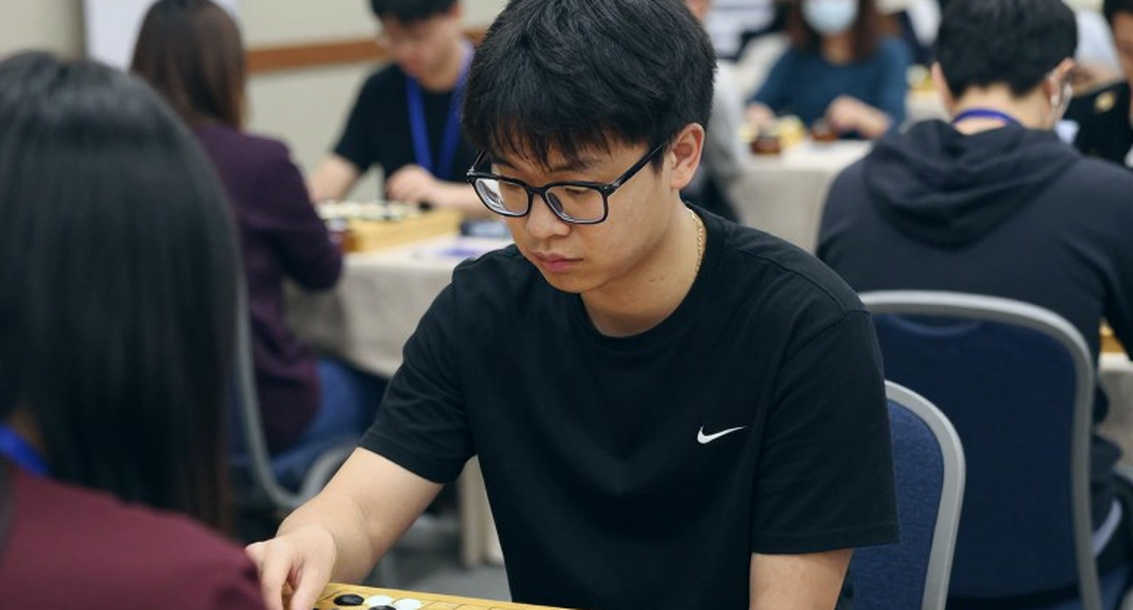
Each route demands a different skill set. The World Cup rewards stubbornness in knockout play, where you can lose a game and still advance. The Grand Chess Tour rewards consistency across many events. The rating spot rewards endurance across an entire year. And here is a point few notice: a player who excels at the World Cup may not excel at the Candidates. Different formats produce different champions.
This explains why players and their agents calculate every event like long-term moves. A small event can be a stepping stone; a big event can be a trap if the schedule is too dense. And during a transfer season, these calculations are pushed to the extreme, because time is the scarcest resource an elite player has.
The blind spot of collective memory
We tend to remember chess through moments, not numbers. Game six of the 2026 world championship match between Bobby Fischer and Boris Spassky — the game Fischer won after having forfeited one in protest over playing conditions — is remembered as a symbol of defiance. But behind that symbol lies a fact rarely mentioned: it was Fischer's own psychological pressure and loneliness that led him down a path of self-destruction later in life.
This is the blind spot of collective memory. We remember the winner, forgetting the price they paid. We remember Carlsen's 2882, forgetting the thousands of hours at the training board and the sleepless nights under the pressure of holding the crown.
In women's chess, this blind spot runs even deeper. Women's events are often treated as a corporate social responsibility prop. Sponsors need a gender-equality image for their annual reports, so they fund a women's event — but the prize fund is often only a fraction of the men's, and media access is far smaller. Top female players such as Judit Polgar, who once reached the overall world top 10, or Hou Yifan have proven their class, but the system was never designed for them to shine on the biggest stage.
The commercialization of women's chess is not being taken seriously. Often, it is just a line in a report.
The silence of 2026: learning to hear the board again
In 2026, live events nearly vanished. Super-tournaments moved online. The stands were empty. But chess differs from football in one fortunate way: it never needed stands. It needs silence.
When the stands are empty, I hear the game whisper in a different language. I hear pieces being moved, the clock ticking off seconds, the breathing of players through the small condenser mics of online events. And in that silence I recognized the poetry of chess: it is the sport of pauses, where a move is thought before a hand touches a piece.
In those years I began writing a series, Chess as Life, finding metaphors for living in crowdless games. Fewer pieces, but deeper emotional reach. And I learned to tell a story through silence — spacing details like breaths, letting the reader fill in the gaps.
The fall and humility as a tactic
In 2026, at the World Cup in Russia, I thought I had stepped onto the stage. It turned out I had only entered the corridor. That lesson taught me that humility is not weakness. It is a tactic.
When you admit you do not know, you begin to learn. When you admit your data may be hollow, you begin to verify. And in chess — where one wrong move can destroy an entire game — verification is a survival skill.
I once received a full analysis of a tournament, complete with sections from opening to endgame. But on close reading, every conclusion rested on unsupported assumptions. No player names, no moves, no results. That was when I understood: a beautiful analytical framework with no real data is more dangerous than a blank article. Because it creates the illusion of understanding.
Failure in chess is not a wrong move; it is seeing the winning move clearly and still choosing otherwise.
Anti-cheating: the battle that changed chess forever
In 2026, the chess world was shaken by cheating allegations at an invitational in Saint Louis, when world champion Magnus Carlsen withdrew from the event after losing a game to Hans Niemann. The affair opened a long period of debate over evidentiary standards, the right to remain silent, and the line between suspicion and conclusion.
This is a field where I believe data is insufficient to reach a verdict, because chess has an odd feature: a good move proves nothing, yet an unusually high engine match rate is a troubling signal. The problem is that no threshold is clearly defined. What percentage of match is considered normal? No one can answer decisively.
That controversy exposed a truth about the sport: the anti-cheating system is chasing technology. Online platforms ban accounts in waves every week, but in over-the-board play, control is far harder. And when trust erodes, the first thing to collapse is not the result, but the audience's faith in the legitimacy of the champion.
Data is not truth, it is a filter
There is a line I keep close: the board never lies, only we fool ourselves with beautiful numbers. Elo, ACPL, win counts, head-to-head records — all are tools. Tools are not wrong. Those who use them are.
I remember a comment from an older fan after a game: the commentator's metrics said nothing at all, but his voice let me hear a whole life in a single move. That comment, more than any analytical table, taught me that the value of data is to help us see deeper, not to feel for us.
So in a transfer season full of noise, what should readers do? Rank information by evidence, not by how compelling it sounds. Track money, contracts and coaching movements before believing a rumor. And remember that injuries — physical or psychological — are often kept secret, so an unexplained absence can carry far more meaning than what is officially announced.
Chess is changing. A new generation — young players from India such as Gukesh, Praggnanandhaa and Arjun Erigaisi, alongside talents from Uzbekistan and the United States — is rising at unprecedented speed, carrying a style forged by engines from childhood. Online platforms are rewriting the rules, both of play and of earning. Organizers are experimenting with new formats, from rapid to Armageddon — a format in which White has more time but must win, while Black wins the match with a draw.
Takeaway
I believe the next decade will reshape how we remember great players. When every move can be analyzed down to the percentage point, when every player is measured by the same yardstick, the real difference no longer lies in the number. It lies in the moment when a human being, under the pressure of a decisive game, chooses a move no computer taught them.
And perhaps that is what is worth following this season: not who switches to which federation, but who dares to play a move no one has played before. Because numbers will be surpassed. Only memory remains.