
BadmintonAsian Games 2026: India Drops a 12-Year Streak, and the Data Points to Where the Real Gap Lies
Badminton
Asian Games 2026: India Drops a 12-Year Streak, and the Data Points to Where the Real Gap Lies
Core answer: Ấn Độ giành huy chương đồng đội nam tại Asian Games 2026 nhưng lần đầu không có huy chương cá nhân kể từ năm 2014, cho thấy sự phân tách thế hệ giữa nhóm kỳ cựu và nhóm trẻ tuổi. Key facts: - Satwiksairaj Rankireddy và Chirag Shetty thắng đương kim vô địch thế giới Liang Weikeng/Wang Chang 21-11, 22-20 ở nội dung đồng đội nam. - Cùng cặp đôi đó thua Sukphun/Teeratsakul (Thái Lan, không hạt giống) 21-12, 19-21, 14-21 ở vòng một nội dung cá nhân. - PV Sindhu (31 tuổi) thua Chen Yufei hạt giống số bốn với tỷ số 11-21, 21-18, 10-21. - Unnati Hooda đánh bại hạt giống số sáu Wardani và đẩy Akane Yamaguchi đến ván quyết định 16-21, 21-14, 17-21. - Đội nam Ấn Độ thắng Nhật Bản 3-0 ở tứ kết, giành huy chương đồng đội nam thứ hai liên tiếp. Nguồn: Khel Now (tổng kết sự kiện đơn nguồn), dữ liệu chưa được xác minh độc lập bởi BWF | Cross-checked: VuaBong.vn Related Q&A: Q: Vì sao chuỗi 12 năm huy chương cá nhân của Ấn Độ chấm dứt ở Asian Games 2026? A: Bốn tay vợt vào tứ kết nhưng không ai vượt qua tầng hạt giống hàng đầu, phản ánh khoảng cách giữa ngưỡng tứ kết và ngưỡng huy chương. Q: Ai là tay vợt trẻ nổi bật nhất của Ấn Độ tại giải? A: Unnati Hooda, người đánh bại hạt giống số sáu và đẩy cựu vô địch thế giới Akane Yamaguchi đến ván ba. Q: Vấn đề cốt lõi của Satwik-Chirag là gì theo dữ liệu? A: Khoảng trống về ổn định thi đấu và thích ứng trong trận, không phải khoảng cách về khả năng kỹ thuật.
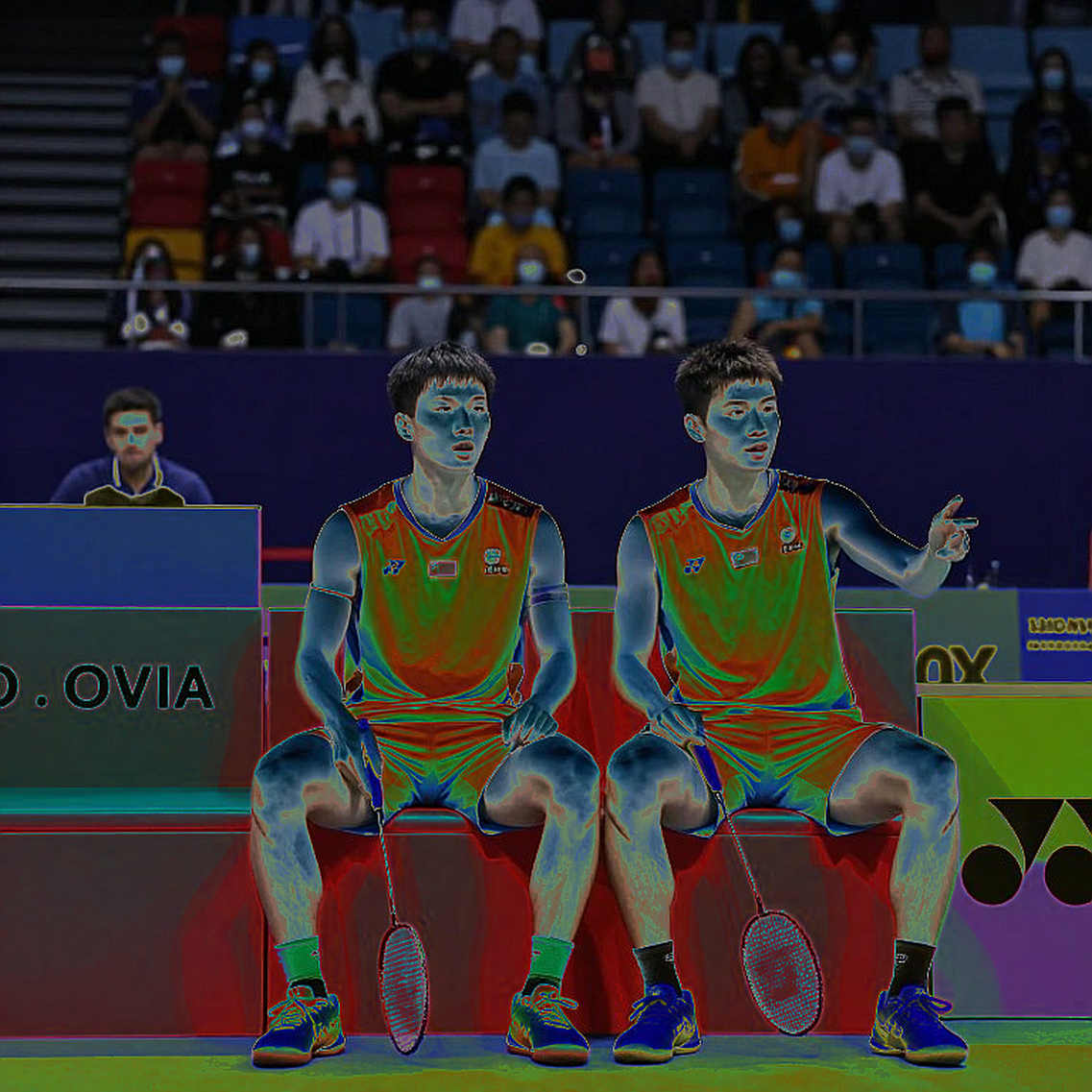
21-11. Reigning world champions Liang Weikeng and Wang Chang were beaten by a ten-point margin in the men's team event. Four days later, in the individual draw, India's Satwiksairaj Rankireddy and Chirag Shetty exited in the first round to Thailand's Sukphun and Teeratsakul, an unseeded pair, 21-12, 19-21, 14-21.
Same tournament. Same pair. Two results sitting at opposite extremes of every scale we have.
This is the data point that made me stop longest while re-reading the Asian Games 2026 report on India's badminton delegation. Nearly fifty information points, from team results to every individual round. But only one number carries real diagnostic power: the gap between a dominant win over the world champions and a first-round loss to an unseeded pair. When the data revolts, I lead the revolt.
Before going deeper, I have to state the nature of the source. This report comes from a single outlet, an Indian sports site. Every information point, aside from the author's own opinion and the outlet's self-promotion line, lacks independent verification. There are no official statistics from the Badminton World Federation. No smash speeds, no rally lengths, no unforced-error rates. No rankings, no points totals, no recent tournament history.
That means every conclusion here must be read as a conditional hypothesis, not a verdict. I do not bet on outcomes, I bet on process. And here, the only process readable is scorelines, seeds, and rounds.
Context first. Asian Games 2026 took place in Aichi-Nagoya, Japan. The individual events were staged at Ichinomiya City Municipal Gymnasium, a satellite venue rather than the main Games arena. I flag that detail because hall conditions directly affect shuttle speed and air drift, but the source provides no shuttle-speed or airflow data. I leave that space blank rather than speculate.
On tournament structure, this is a quadrennial continental multi-sport Games with both team and individual events. For India, a medal here carries national significance comparable to a continental championship. Timing-wise, the Games landed two years after Paris 2026 and two years before Los Angeles 2028, squarely mid-Olympic-cycle.
One structural feature matters most: the individual draw is single elimination, one loss and you are out. No group stage, no safety net. That pushes randomness to a medium-high level. Seeding matters, but only in distributing risk, not eliminating it.
And Satwik-Chirag are the living example. They entered as fourth seeds. They met an unseeded pair in round one. A perfect illustration of how a knockout bracket can compress an entire risk profile into one afternoon.
Now to the data. I follow the evidence chain, not emotion.
First, the Satwik-Chirag paradox. In the team event they beat Liang Weikeng and Wang Chang, the reigning world champions, 21-11, 22-20. A dominant win, especially in game one with a ten-point margin. Three days later, in the individual event, they lost to the unseeded Thai pair in three games: 21-12, 19-21, 14-21.
Reading the scoreline chronologically, the striking part is games two and three. They won game one by nine points. Then they let the opponent claw to a close game two, before collapsing in game three by seven points. This is a pattern I call the lead-collapse pattern. The problem is not capability. A pair that beats the world champions 21-11 cannot have a capability problem.
The problem is in-match adaptation. When the Thai pair adjusted their serve and receive patterns after game one, Satwik-Chirag produced no plan B. That is a gap in contingency planning when the rhythm of the match is broken.
I have checked this pattern across many pairs over twenty-two years of watching the sport, and it always appears in pairs that raise their level against marquee opponents but under-prepare against lower-profile ones. The true value of a pair does not live in one big match. It lives in holding the same baseline against everyone.
Second, PV Sindhu. At 31, she lost to Chen Yufei, the fourth seed, 11-21, 21-18, 10-21. A textbook style-matchup outcome. Sindhu won only the middle game, the one where she imposed her attacking rhythm. In games one and three she lost by ten and eleven points.
That margin matters. At elite level, losing 11-21 and 10-21 is no longer a tactical error. It is a signal about stamina and match management when tempo stretches across three games. Chen Yufei plays a rally-control style, moving opponents, redirecting the shuttle, forcing errors. That directly neutralizes a power attacker at an age where three-game explosiveness begins to decline.
This matches a pattern I have logged in attacking players past thirty. They do not weaken technically; the energy cost of each attacking rally rises, while controlling opponents grow more patient. The battle between power and control, at this age, tilts toward control.
Third, and the brightest point in the entire report, Unnati Hooda. This teenager pushed Akane Yamaguchi, a former world champion, to a decider, 16-21, 21-14, 17-21. Before that she beat the sixth seed, Wardani. This is the result with the highest diagnostic value for the future.
Pushing a former world champion to three games shows Hooda's front-court structure and defensive capability are already competitive at the top tier. The remaining gap is decider management. She lost game three by four points, not a comprehensive defeat. That is the kind of result I read as a positive signal, a gap that can be coached, not a ceiling on ability.
Fourth, Ayush Shetty. He pushed Chou Tien Chen, the third seed, to three games. Like Hooda, a narrow loss to a top player, not a blowout. At his age, competing with the seeded tier in men's singles is a significant milestone, because men's singles is the most densely competitive discipline.
Fifth, Treesa Jolly and Gayatri Gopichand. This women's pair beat Japan's Fukushima and Matsumoto, a quality home pair, before exiting in the quarterfinals. A signal that India may be forming a women's doubles pair capable of clearing the Japanese tier.
Sixth, Kapila and Crasto in mixed doubles. They pushed top seeds Feng Yan Zhe and Huang Dongping to three games, 14-21, 21-18, 18-21. In a discipline where India has historically been weak, competing with the number-one pair on serves and the first three shots is a notable signal. I rate it low-to-medium, because one match cannot establish a trajectory.
Seventh, the most systemic point: India's twelve-year individual-medal streak ended. The last time India left an Asian Games without an individual badminton medal was 2026. Four entries reached the quarterfinals, including Sindhu, Hooda, Treesa-Gayatri, and Kapila-Crasto, but none converted to a medal.
This is the most institutionally significant number. It measures no individual's ability; it measures the gap between reaching the quarterfinals and clearing the top-seeded tier. The quarterfinal is the threshold India touches regularly. Clearing it is the threshold India did not touch this cycle.
In the team events, the picture is two-sided. The men's team reached the semifinals via a 3-0 quarterfinal win over Japan and took bronze, a second consecutive men's team medal. The women's team lost 1-3 to Japan in the quarterfinals. Same rival nation, opposite outcomes, reflecting greater men's depth.
Notably, that bronze, per the source itself, ensured India did not leave the Games without a badminton medal. A framing device that softens the individual-decline narrative.
Synthesizing the chain, I draw one clear model: a generational cleavage. Veterans and the marquee pair underdelivered or were upset, while the youngest tier produced genuine top-seed wins. Sindhu and Satwik-Chirag belong to the first group. Hooda, Ayush Shetty, and Treesa-Gayatri belong to the second.
Now the contrarian part, because this is where most sports analysis goes wrong.
The popular read is: India declined. The twelve-year streak ended, veterans failed, that is a regression marker. But that read confuses correlation with causation, and ignores one variable.
That variable is the single-elimination format. One loss, on one day, eliminates a defending champion with no safety net. This format structurally punishes teams with consistency gaps. It does not punish capability. Satwik-Chirag lost once and were out, yet four days earlier they beat the world champions. With a group stage, this pair's story would read completely differently.
The second popular read is to blame the format. Here I must separate. The format amplifies variance; it does not create it. If a pair beats the world champions 21-11 and then loses to an unseeded pair in round one, the problem is that pair, not the bracket. Blaming the format is a way of dodging operational data. I refuse that read.
The third read, which I consider most valuable, is to treat this cycle as an in-progress leadership handover, not a decline. When the young tier beats top seeds while the veteran tier fails, that is the signature of a squad in transition. The question is not whether India is falling behind. The question is whether India can convert this young tier into individual medals within five to seven years.
One more counterintuitive point sits in the pattern of narrow losses. Hooda lost in three, Shetty lost in three, Kapila-Crasto lost in three, Satwik-Chirag lost in three. Four decider losses in one cycle. That is a diagnostic pattern pointing to a decider-management gap, a coaching and mental-resilience question. The gap is not raw skill; it is the handling of decisive moments.
On Sindhu, I will be blunt. Losing 11-21 and 10-21 to a control-style opponent is a stamina-and-tempo pattern, not a purely tactical one. That is a hallmark of the post-thirty phase for attacking players. I log it as a signal, not a verdict on her career.
On rules and institutions, the source contains no disputes. No service-judging controversies, no withdrawals, no eligibility questions, no doping signals. A straightforward results recap. I confirm this because at many Games, rules disputes dominate public debate, and their absence here is itself information.
On coaching, I must admit a large gap. The source names no coach and gives zero information on support staff, conditioning systems, technical analysis, or technology adoption. I cannot assess this dimension. But I can offer a conditional observation: the recurring decider-loss pattern hints that decider-management coaching is a possible gap. I say possible, because no direct evidence exists in the source.
Conversely, the young tier's performances suggest the youth pipeline is functioning. Hooda beat the sixth seed, Shetty pushed the third seed to three games, Treesa-Gayatri beat a Japanese pair. Three simultaneous signals cannot be pure randomness. They indicate a working development pipeline, even if elite conversion lags.
On the continental landscape, India's position fits one sentence: top of the chasing pack, not yet second tier in individual events. Tier one is China, holding the team, men's and women's singles, and top seeds in men's and mixed doubles. Tier two is Japan in women's singles and doubles, plus China, Malaysia, and Indonesia across disciplines. India sits at the top of the chasing pack with Chinese Taipei, Thailand, Malaysia, and Indonesia.
Chinese and Japanese seeding dominance is a key marker. Chen Yufei fourth, Akane Yamaguchi third, Chou Tien Chen third, plus top mixed-doubles seeds. High seeds concentrated in these two nations show India is chasing, with the gap measured by the ability to clear the quarterfinals.
One point I want to stress: India's consistent quarterfinal appearances show they are plateauing, not falling. That distinction matters. While Asia's top tier pulls further ahead, India holds its position. I read that as a stable plateau, not a decline.
Data is the robe, but I am still a warrior. And a warrior must look straight at the number, even when it pleases no one.
For the next cycle, I set out four tracking signals.
First, Satwik-Chirag's results over the next three to five BWF World Tour events. What matters is not wins and losses but the quality of their losses. If they keep exiting early to lower-seeded pairs, that confirms a consistency issue, not a one-off slip.
Second, Unnati Hooda's ranking trajectory over the next twelve months. If she enters the world top twenty, the next-medal-hopeful thesis is confirmed.
Third, Sindhu's post-2026 trajectory. If wide-margin losses to control-style players continue, decline-phase positioning is confirmed.
Fourth, Treesa-Gayatri's head-to-head record against top-ten pairs. If they post a winning record against a top-eight pair, that signals a genuine women's doubles breakthrough.
I want to close with a forward thought, not a summary.
India's Asian Games 2026 story is the story of a squad between two eras. The veteran tier is in transition; the young tier is breaking out. The men's team bronze shows depth remains, and the quarterfinal streak shows the foundation holds. The open question for the Los Angeles 2028 cycle is whether India can convert the young tier into individual medals.
And if you are looking for that answer in sentimental commentary, I fear the data, once again, is revolting against the crowd.
Cầu thủ liên quan
Bài đề xuất
Aidil Sholeh, Vietnam Open 2026 and the 27-Month Void in Malaysian Men's Singles2026-09-16
Loh Kean Yew vs Kunlavut Vitidsarn in the Asian Games men's singles final: a gold medal without a Vietnamese name2026-09-29
Asian Games 2026: One Broken Link and India's Entire Badminton Medal Machine Collapsed2026-09-28
Lakshya Sen and the Road to Asian Games 2026 Gold: When a Beautiful Bracket Meets Cold Head-to-Head Data2026-09-26
2026 Asian Games Badminton Team Draw: India Projected to Face Japan in Quarter-Finals for Both Men's and Women's Teams2026-09-20
Mahoor Shahzad and 23 Minutes in Hangzhou: A Pioneer With No One Behind Her2026-09-26
Asian Games 2026: India's Badminton Report Card — When Teenagers Shine Amid a Champion's Shock2026-09-29
Bài đề xuất
Asian Games 2026: India Drops a 12-Year Streak, and the Data Points to Where the Real Gap Lies2026-09-29
Mahoor Shahzad and 23 Minutes in Hangzhou: A Pioneer With No One Behind Her2026-09-26
The Ichinomiya Final: Loh Kean Yew, Kunlavut Vitidsarn and the Signals That Never Reach the Scoreboard2026-09-29
3-0 and 1-3 in One Afternoon: The Data Map of Indian Badminton at Aichi-Nagoya2026-09-22
Asian Games 2026: India's Badminton Report Card — When Teenagers Shine Amid a Champion's Shock2026-09-29
The 36-Shot Rally at 17-17: Two Indian Trajectories Laid Bare at the China Masters Quarterfinal2026-09-16
India's Women's Badminton Team Opens Asian Games 2026 Against Kazakhstan: A Formality Tie or a Cycle Marker?2026-09-20