
BadmintonAsian Games 2026: Defending Champions Satwik-Chirag Fall in Round One, India Post 3 Wins – 3 Losses on Day 1 of Individual Events
Badminton
Asian Games 2026: Defending Champions Satwik-Chirag Fall in Round One, India Post 3 Wins – 3 Losses on Day 1 of Individual Events
Core answer: Đương kim vô địch đôi nam Satwiksairaj Rankireddy/Chirag Shetty thua ngay vòng một ASIAD 2026 trước đôi Thái Lan sau ba game 21-12, 19-21, 14-21. Ấn Độ kết thúc ngày thi đấu cá nhân đầu tiên với ba thắng, ba thua; Dhruv Kapila/Tanisha Crasto là điểm sáng. Key facts: - Satwik-Chirag là hạt giống số 4, thua Peeratchai Sukphun/Pakkapon Teeratsakul (Thái Lan) ngày 25/9/2026. - Dhruv Kapila/Tanisha Crasto thắng hai trận, không thua game nào, gồm hai game deuce 22-20 và 24-22. - Treesa Jolly/Gayatri Gopichand thắng đôi Hồng Kông 21-16, 16-21, 21-16. - Unnati Hooda thắng 21-9, 21-10. - Hai đôi hạng hai của Ấn Độ thua đậm 21-9, 21-5 và 21-14, 21-11. Source: Phân tích chuyên sâu giai đoạn 2, xuất bản ngày 25/9/2026 | Cross-checked: VuaBong.vn Related Q&A: Q: Satwik-Chirag có mất điểm xếp hạng vì thua ASIAD? A: Theo quy định BWF, kết quả ASIAD thường không tính vào BWF World Ranking, vì vậy ảnh hưởng xếp hạng gần như bằng không nhưng cần kiểm chứng. Q: Đối thủ tiếp theo của Dhruv-Tanisha là ai? A: Họ gặp hạt giống số một Trung Quốc ở tứ kết. Q: Vì sao Treesa-Gayatri cần thận trọng? A: Họ vừa thắng Fukushima/Matsumoto ở đồng đội nữ; đối thủ Nhật Bản có dữ liệu trực tiếp để điều chỉnh trước trận tái đấu.
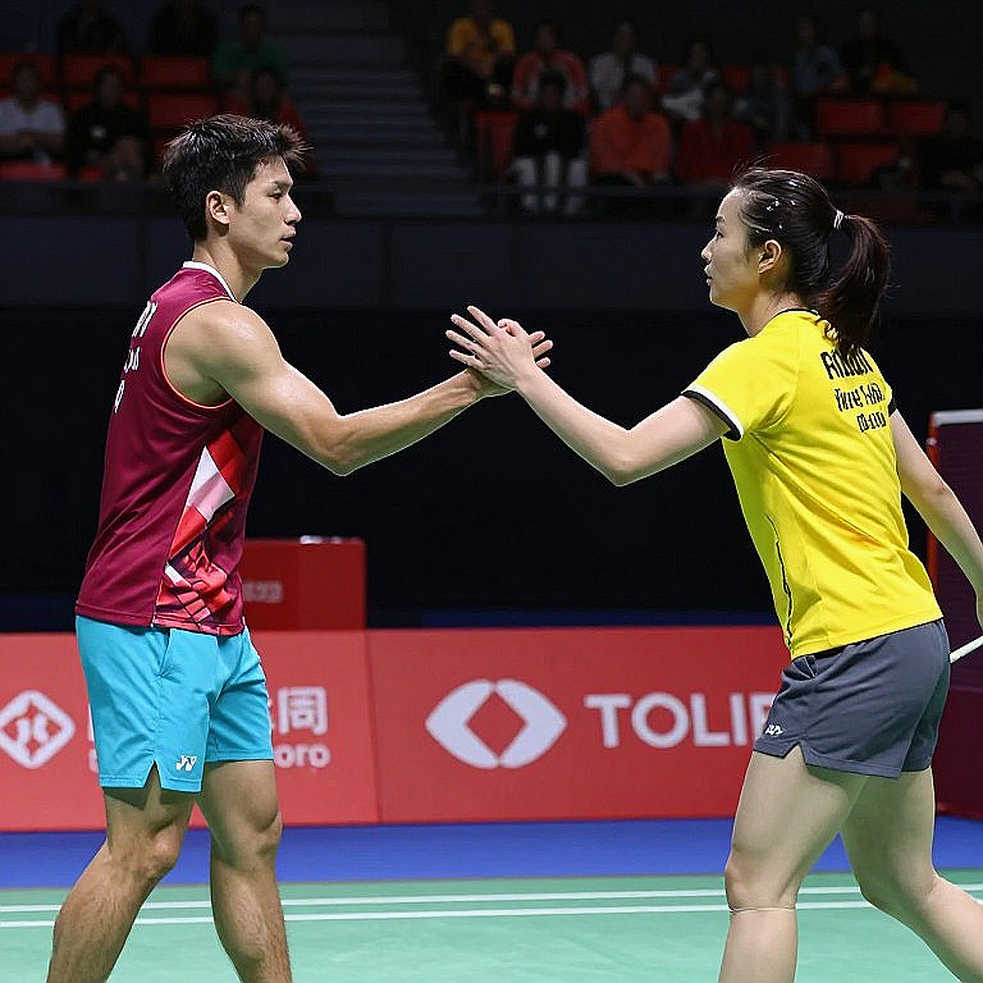
Asian Games 2026 individual badminton events began on September 25, 2026, at the Ichinomiya City Municipal Gymnasium, and the opening day produced the tournament's first major surprise. Defending men's doubles champions Satwiksairaj Rankireddy and Chirag Shetty, seeded fourth, lost in round one to Thailand's Peeratchai Sukphun and Pakkapon Teeratsakul. The scoreline was 21-12, 19-21, 14-21. India finished the day with three wins and three losses in doubles disciplines.
A closer look at the score curve was more revealing than the loss itself. The Indian pair won the opening game by nine points, lost the second by two, then lost the decider by seven. The margin nearly doubled in the third game, a pattern more consistent with physical decline or concentration loss than with a simple tactical flaw. Satwik-Chirag are an attacking pair that relies heavily on jump smashes and high contact points. After the first game, the Thai pair most likely flattened the rallies, denied the Indians their preferred attacking height, and stretched every exchange to turn the match into an endurance contest. The source material did not include smash speed, rally length, or error-rate data, so the conclusion remains an inference from the score progression.
The scheduling context could not be ignored. The Asian Games team events were played earlier in the same week, with no recovery block before the individual tournament began. For a pair that carries such a heavy load in the team competition, entering the individual event with partial recovery is nearly inevitable. That does not excuse the loss, but it does explain the shape of the collapse better than the theory of sudden technical decline.
There was also tension between the labels used in the report. Satwik-Chirag entered as defending champions but only as the fourth seeds. In badminton, seeds follow current rankings and entry criteria, not title-holder status. That gap suggests the pair's position had already slipped before this event. The upset was genuine, but not as statistically extreme as the headline suggested. Their opponent was ranked World No. 36, and a single three-game match is far too small a sample to support conclusions about regression.
India's strongest signal of the day belonged to mixed doubles pair Dhruv Kapila and Tanisha Crasto. They won two matches without dropping a game, including two deuce games at 22-20 and 24-22 against Malaysia's Goh Soon Huat and Lai Shevon Jemie. Winning two deuce games in one day reflects strong decision making under pressure. Their reward is a quarterfinal against the top-seeded Chinese pair Feng and Huang, which will be the first genuine test of their potential.
In women's doubles, Treesa Jolly and Gayatri Gopichand beat a Hong Kong pair 21-16, 16-21, 21-16. The identical five-point margins across three games point to a lack of separation from a lower-ranked opponent. They never lost control, but they never dominated either. Their next opponents are Japan's Fukushima and Matsumoto, whom they beat earlier in the same week in the team event. That gives the Japanese pair recent direct data to adjust from, making the rematch a dangerous fixture.
Unnati Hooda produced a clean win, 21-9 and 21-10, but it carried little analytic weight because the opponent's level was not established. India's second-tier doubles teams, meanwhile, suffered lopsided losses against Indonesian pairs: 21-9, 21-5 in men's doubles and 21-14, 21-11 in women's doubles. These results exposed a structural gap in India's doubles pipeline, not just a bad day. The country is competitive at the top of its hierarchy but extremely thin behind it.
On the ranking question, Asian Games results are generally not counted toward the BWF World Ranking under standard regulations. If that remains current, this defeat costs almost nothing in ranking points and will not trigger future seeding losses. The real cost is domestic: recognition, rewards, and the psychological ledger of a defending champion's early exit.
India's women's singles veteran PV Sindhu, Lakshya Sen, and Ayush Shetty all received byes on day one. That gives them extra rest but places greater expectation on their opening matches. Lakshya Sen faces Loh Kean Yew in an early high-variance draw. If the singles players lose early, the narrative will likely shift from an unlucky opener to a systemic problem, even though the available evidence does not support that leap.
The most likely explanation for Satwik-Chirag's loss remains fatigue and third-game fragility, not a decline in level or a style crisis. The pair's score curve fell from plus nine to minus seven across three games, a clear energy story. They need a third-game contingency plan for future tournaments. What should be watched next is Treesa and Gayatri's rematch with the Japanese pair, Dhruv and Tanisha's quarterfinal against the top seed, and the opening rounds of the Indian singles players. Those results, not one first-round upset, will determine the real meaning of India's day one at the Asian Games.

Cầu thủ liên quan
Bài đề xuất
Asian Games 2026: One Broken Link and India's Entire Badminton Medal Machine Collapsed2026-09-28
3-0 and 1-3 in One Afternoon: The Data Map of Indian Badminton at Aichi-Nagoya2026-09-22
2026 Asian Games Badminton Team Draw: India Projected to Face Japan in Quarter-Finals for Both Men's and Women's Teams2026-09-20
India 3-0 Kazakhstan at the 2026 Asian Games: Three Singles Ended the Tie, Two Gaps Remain Untouched2026-09-21
Tanvi Patri wins the 2026 Asian U17 title: rereading 13 games in Chengdu and the real signal behind India's rising wave2026-09-16
Asian Games 2026: India's Defending Men's Doubles Champions Crash Out in Round One, and the Score Curve Nobody Read2026-09-26
PV Sindhu knocked out by Chen Yufei in Asian Games 2026 quarter-final2026-09-27
Bài đề xuất
Asian Games 2026: PV Sindhu's Five-Rival Map and the 0-10 Record Nobody Wants to Read Aloud2026-09-25
Asian Games 2026: Five Days and the Traps Hidden Behind a Bye2026-09-25
India beat Bangladesh 3-0 in the Asian Games 2026 men's team opener: the story is the squad structure, not the scoreline2026-09-22
23 Minutes in Hangzhou: Mahoor Shahzad and the Limits of a Lone Pioneer2026-09-27
The Empty Data Pipeline: A Lesson on the Limits of Badminton Analysis2026-09-19
India's Women's Badminton Team Opens Asian Games 2026 Against Kazakhstan: One Line, and an Entire Bracket Behind It2026-09-20
3-0 and 1-3 in One Afternoon: The Data Map of Indian Badminton at Aichi-Nagoya2026-09-22