
Badminton
Asian Games 2026: The Badminton Draw and the Five-Day Compression Problem
Câu trả lời cốt lõi: Lễ bốc thăm cầu lông Asian Games 2026 tại Aichi-Nagoya đưa Lakshya Sen gặp Loh Kean Yew ngay vòng hai đơn nam, đồng thời nén vòng 1/32 và vòng 1/16 vào cùng ngày 26 tháng 9. Dữ kiện chính: - Nội dung cầu lông cá nhân diễn ra từ 25 đến 29 tháng 9 năm 2026, thể thức loại trực tiếp một lần thua. - Đội nam Ấn Độ giành huy chương đồng đồng đội sau khi thua Trung Quốc ở bán kết. - PV Sindhu dự kiến đi qua Letshanaa Karupathevan, Tomoka Miyazaki, và có thể gặp Chen Yufei. - Vòng 1/32 và vòng 1/16 cùng ngày 26 tháng 9, tạo nguy cơ hai trận đấu trong một ngày. - Hai cặp đôi trong bản tin chưa khớp cặp đôi quen thuộc: Fajar Alfian/Muhammad Shohibul Fikri và Kim Won-ho/Seo Seung-jae. Nguồn: Bản tin bốc thăm Asian Games 2026 từ Khel Now, công bố tháng 9 năm 2026; dữ liệu chưa được đối chiếu với ban tổ chức Badminton Asia hoặc Hội đồng Olympic châu Á. Hỏi đáp liên quan: Hỏi: Asian Games 2026 có tính điểm xếp hạng của Liên đoàn Cầu lông Thế giới không? Đáp: Chưa được xác minh trong nguồn công khai hiện có. Hỏi: Vì sao lịch thi đấu năm ngày là rủi ro? Đáp: Vì vòng 1/32 và vòng 1/16 cùng ngày khiến tay vợt tiến xa phải đánh hai trận trong một ngày. Hỏi: Trận bán kết đôi nam đáng chú ý nhất trên giấy là gì? Đáp: Satwiksairaj Rankireddy/Chirag Shetty có thể gặp Kim Won-ho/Seo Seung-jae nếu nhánh giấy diễn ra đúng.
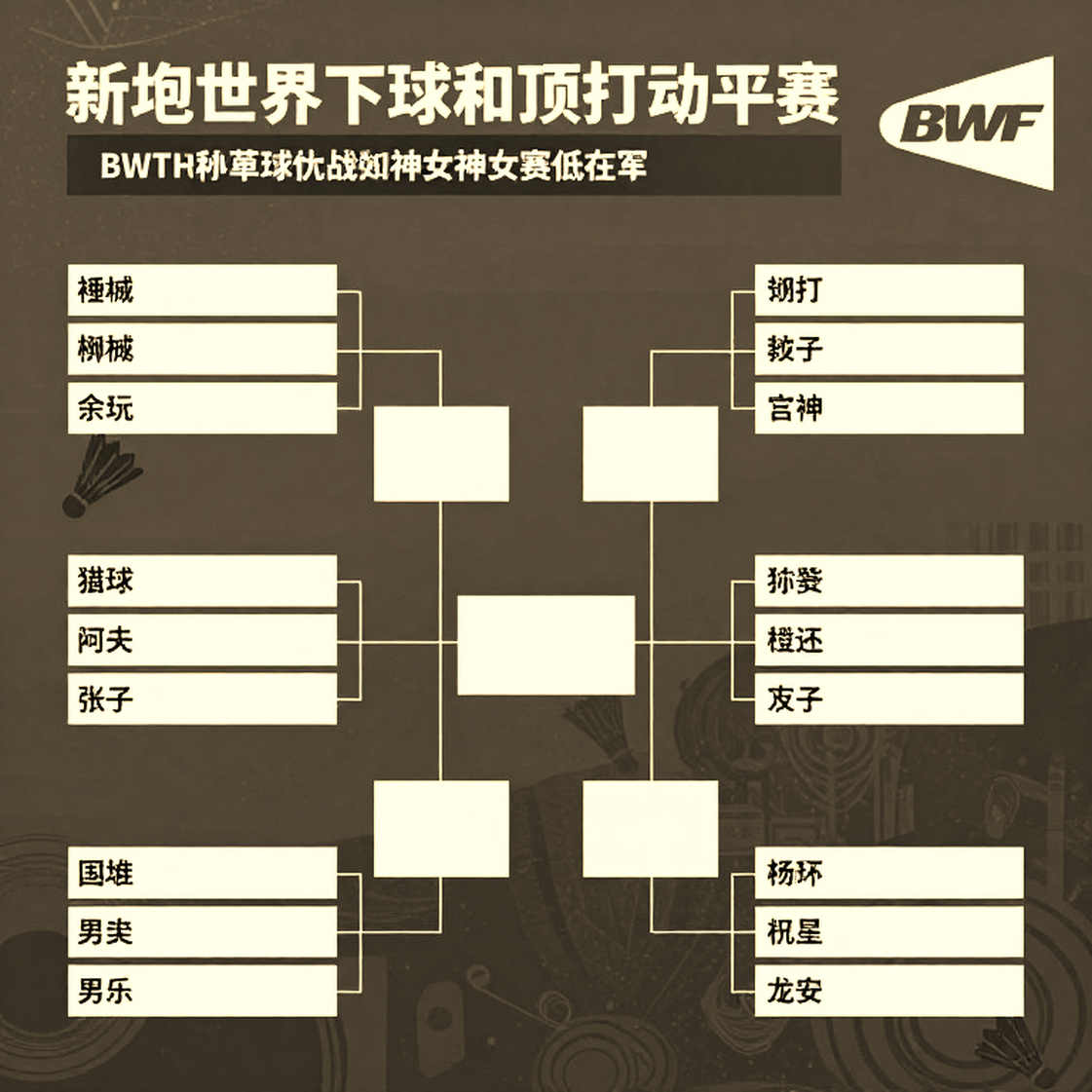
The A4 sheet the Asian Games 2026 organisers released on Thursday has two columns: one for names, one for blanks waiting to be filled. Most lines are easy to read — seeds receiving byes, a few pairs standing side by side for the first time. But one line made me pause longer than the rest. Round two, men's singles: Lakshya Sen against Loh Kean Yew. At a Super 1000 or a World Championship, that is a quarter-final or a semi-final. In Aichi-Nagoya it sits in the second round. Which means one of two names good enough to reach the continental top eight will pack their bag before the tournament has warmed up. I took out my notebook, redrew the top half, and wondered whether the organisers understood the density of that single line.
That is how I usually begin: from one small data point, reading backwards into the mechanism that produced it.
Asian Games 2026 takes place in Aichi-Nagoya, with the individual badminton events running from 25 to 29 September. Single elimination — no group stage, no second chance, no advancing after an opening loss on tie-break. A player walks on court with exactly one life. The team events closed earlier, with the Indian men taking bronze after losing to China in the semi-final. That fact shapes the mood of the whole delegation entering the individual draw.
On the sheet, three Indian entries hold first-round byes. To outsiders a bye is a gift. To someone who works with data, it is a variable that needs weighing.
Discipline is not a set of chains; it is a map for the lost — and here the map is drawn in hours, not in names.
Start with the calendar. The round of 32 and the round of 16 are scheduled on the same day, 26 September. That is the most consequential technical detail in the entire notice, and also the easiest to skim past. A singles player going deep will play two matches in one day — four to six games if three-game deciders are involved, on an indoor court where temperature and humidity are controlled for the tournament, not for the individual. For a 30-year-old in the closing stretch of a career, two matches in a day is a recovery problem, not a technical one. For a 21-year-old, it is an opening.
I have watched this structure many times, and it always produces the same outcome: big seeds fall in the second or third round, not because they were tactically read, but because the legs stop taking orders in the third game of the second match of the day.
PV Sindhu's women's singles path draws a fairly clear gradient. Letshanaa Karupathevan first, then Tomoka Miyazaki, and if the paper holds, Chen Yufei at the end. This is the kind of bracket I call a rising staircase: each round slightly harder than the last, no shock, but no room to breathe either. Sindhu is a power attacker; she needs short rallies to close points. Chen Yufei controls tempo and strikes late in long exchanges. When those two styles meet, the only question is whose rhythm gets imposed on the rally. Past fifteen shots, the advantage tilts to the controller. That much I can state. The rest is inference.
And Miyazaki in between? She is in her early twenties, on the way up. Placing a rising player beside a declining one in the same bracket is how a draw accidentally writes a short play about generational handover. I like those plays. They are more honest than any headline.
The men's singles path has one more detail worth noting: Ayush Shetty, a young name, shares a section with Chou Tien Chen. At Chou's age, every tournament is a test of sustaining fitness inside a knockout format. At Shetty's age, every tournament is a tuition fee.
Now the part I have to state most clearly.
Two pairings on the sheet do not match my memory. The first: Fajar Alfian alongside Muhammad Shohibul Fikri. The second: Kim Won-ho alongside Seo Seung-jae. In both cases I know their established partners, and those are not the names here. Two possibilities exist: Indonesia's and Korea's coaching staffs are experimenting with new combinations for a multi-sport event, or the notice contains errors. I have no basis to choose either, and by my own rule, unverified means no conclusion.
That leads to the source question. The report I read comes from a generalist Indian sports outlet, not a specialist badminton channel. The footer carries a long self-promotion block: follow on Facebook, Twitter, Instagram, download the app, join the WhatsApp and Telegram groups. That is the signature of a traffic-driven content model. It does not mean the data is wrong. It means the data has not been independently verified. Every projected meeting in the original — Sindhu possibly facing Chen Yufei, Satwik/Chirag possibly facing Kim/Seo in the semi-final — is a paper bracket, not a forecast.
And here is the counter-intuitive point.
Fans read a draw linearly: light half means a deep run, heavy half means an early exit. But in a five-day compressed tournament, with the round of 32 and the round of 16 on the same day, a light draw becomes the trap. A player with a first-round bye walks on court on 26 September with one match in the legs — while an opponent may have finished a match hours earlier, hands warm, rhythm found. Being cold in a combat sport is not an advantage. It is another unquantified variable.
I once watched a player take three consecutive byes and then break in the first real match because he could not find rhythm. The hall went quiet in the way that means nobody understood what had just happened. I understood. I wrote it down.
Another item needing verification: whether the Asian Games carries world ranking points at all. I have found no document confirming it. If the answer is no, every analysis of the form "results will change the rankings" is meaningless. This is a continental Olympic committee event, run on that committee's calendar, not on the professional tour's. Its value is medals and national standing, not accumulated points. Those two things produce entirely different preparation strategies, and I have not seen the question seriously raised in the media.
Given that, expectations need cooling. The Indian men stopped at bronze. The women's team has just come through a disappointing campaign. Loading individual players with a deep-run expectation while holding no three-to-six-month form data is a media habit, not an analytical conclusion. I am not saying India will fail. I am saying nothing in the public data supports a brighter outlook than reality.
When a ticket to the semi-final cannot erase the prejudice in the stands, people usually blame the draw. The draw is not at fault. The draw is merely a function of seeding and luck.
From the court to the screen, I have learned that the meta never stands still — and in Aichi-Nagoya, this tournament's meta is time, not technique.
26 September will answer most of the questions. Whoever holds rhythm in the second match of that day advances. Whoever takes a bye and walks on court with cold legs will wonder why they lost to an opponent they used to beat comfortably. I will track the win rate of the bye group against the group that started from round one, and I will write the number down. If it deviates from the historical average, we will have a new data point on the compressed format — something no professional tour ever teaches a player.
Cầu thủ liên quan
Bài đề xuất
Hawk-Eye and the Limits of Line-Call Verdicts in Elite Badminton: When Technology Cannot Erase Controversy2026-09-16
India beat Bangladesh 3-0 in the Asian Games 2026 men's team opener: the story is the squad structure, not the scoreline2026-09-22
The Empty Data Pipeline: A Lesson on the Limits of Badminton Analysis2026-09-19
2026 Asian Games Badminton Team Draw: India Projected to Face Japan in Quarter-Finals for Both Men's and Women's Teams2026-09-20
Vietnamese Badminton and the BWF Scheduling Trap: Ranking Points Come From Small Courts2026-09-16
India beats Japan 3-0 in Asian Games 2026 quarter-final: When three rubbers close the tie before the fifth even exists2026-09-23
After Nguyen Tien Minh: Vietnamese Badminton and the Gap Measured by Data2026-09-16
Bài đề xuất
The Empty Data Pipeline: A Lesson on the Limits of Badminton Analysis2026-09-19
India's Women's Badminton Team Opens Asian Games 2026 Against Kazakhstan: A Formality Tie or a Cycle Marker?2026-09-20
After Nguyen Tien Minh: Vietnamese Badminton and the Gap Measured by Data2026-09-16
Jonatan Christie's Defeat and Lessons from the xG Lens: Is Indonesia's Men's Badminton Team Really Ready for the 2026 Asian Games Final?2026-09-24
Asian Games 2026: The Badminton Draw and India's Silver Medal Equation2026-09-21
Asian Games 2026: The Badminton Draw, a Compressed Five-Day Schedule, and the Injuries Nobody Counts2026-09-24
India beat Bangladesh 3-0 in the Asian Games 2026 men's team opener: the story is the squad structure, not the scoreline2026-09-22