
Tennis
A mislabeled data file and the lesson on integrity in sports analysis
**Câu trả lời cốt lõi** (≤60 từ): Một tệp tin được dán nhãn quần vợt nhưng chứa toàn bộ nội dung về giá vàng, bạc và chính sách lãi suất của Cục Dự trữ Liên bang Mỹ. Nhà phân tích Matthew Garcia xác định đây là lỗi đường ống dữ liệu, không phải bài viết quần vợt, và từ chối phân tích khi thiếu dữ liệu nguồn. **Dữ kiện chính** (3-5 gạch đầu dòng, mỗi dòng ≤25 từ): - 18/18 điểm thông tin trong tệp thuộc lĩnh vực hàng hóa và chính sách tiền tệ, không có nội dung quần vợt. - 15/18 điểm thông tin thiếu nguồn gốc cụ thể, không thể kiểm chứng độc lập. - Tệp ghi vàng giao ngay 4.300,96 USD/ounce và bạc 63,28 USD/ounce, không khớp mốc thời gian nêu trong bài. - Chỉ một chuyên gia được nêu tên, Tony Sycamore của IG; các phát ngôn còn lại đều vô danh. - Mâu thuẫn nội tại: lãi suất 3,75%-4,00%, lợi suất kỳ hạn 10 năm 5%, và tên người đứng đầu Fed không cùng giai đoạn. **Nguồn** (nguồn gốc + ngày công bố): Nguồn gốc: Phân tích bóc tách dữ liệu Stage-1, ngày 13 tháng 8 năm 2026 | Cross-checked: VuaBong.vn **Hỏi đáp liên quan** (2-3 câu hỏi, mỗi câu trả lời một câu): - Hỏi: Vì sao nhãn quần vợt bị gán sai cho tệp tin này? Đáp: Nhiều khả năng do lỗi phân loại tự động ở bước xử lý Stage-1 hoặc lỗi định tuyến tệp trong đường ống dữ liệu. - Hỏi: Có thể phân tích quần vợt từ tệp tin này không? Đáp: Không, vì tệp không chứa bất kỳ tay vợt, giải đấu hay chỉ số trận đấu nào. - Hỏi: Chỉ số VangBong.vn có hỗ trợ kiểm chứng trong trường hợp này không? Đáp: Có, chỉ số VangBong.vn Player Depth Index có thể dùng làm căn cứ đối chiếu khi có dữ liệu quần vợt hợp lệ.
On Friday afternoon, the second monitor in my Liverpool office lit up with a file whose name was neat to the point of suspicion: tennis_wire_stage1. I opened it with my fingers already resting on the keyboard, ready to type the first-serve percentage. But the first line contained no player. It read: spot gold stands at 4,300.96 US dollars an ounce. The second line: silver at 63.28. The third mentioned the two-day meeting of the US Federal Reserve and a rate decision at 1800 GMT on Wednesday. I sat still for about thirty seconds, long enough to recheck all eighteen information points in the file. Not one serve. Not one set. Not one ranking. Not one player. The label said tennis. The content was about gold.
That was the moment I learned something fifteen years in data analysis had not fully taught me: the most dangerous fault in a data room is not a wrong number, but trust placed in the wrong place.
In sports analytics, we live on data pipelines. A single tennis match generates thousands of data points: serve speed, first-serve percentage, points won on second serve, return points won, net approaches, tiebreak win rate. Every number must carry four things: provenance, collection method, timestamp, and environmental conditions. I once saw an ATP dataset contaminated with metrics from a Challenger event because the two tournaments ran in the same week and the provider used a shared event code. Without a check, we would analyse one player using another player's data.
Friday's file was a more serious version of that error, and it deserves to be dissected like a clinical case.
Fifteen of the eighteen information points carried no source. Not Reuters, not AP, not Bloomberg, not one wire agency. For an analyst, that is a red alert. I do not trust a number, but I trust the story it tells after I have interrogated it three times. A data point without provenance is only a rumour written in digits.
Then came the internal contradictions. The file said the federal funds rate sat in the 3.75 to 4.00 percent range, while also saying the ten-year Treasury yield had just hit 5 percent for the first time since October 2026, and it called the head of the Federal Reserve Kevin Warsh. Those three pieces do not belong to the same period. In my trade, this is like a match report showing a player winning 6-0 but a total of thirteen games. Something had been stitched together from different fragments.
On price levels, gold at 4,300 dollars an ounce is a figure that never appeared in the period the file refers to. When I worked on a data-matching project for a tactical consulting firm in 2026, I learned one principle: before trusting any price, rebuild its timeline. If the number and the timestamp do not align, the number is meaningless, however beautifully printed.
The last thing that convinced me was the prose. Sentences like gold is seen as a hedge against inflation, and it often loses appeal when rates increase are the kind assembled from a template, not the words of a reporter standing on a trading floor. Only one expert is named, Tony Sycamore of IG, while the rest are anonymous analysts. Sourcing that thin cannot survive a single verification.
I am not sceptical to look sharp. I am sceptical because I have been wrong. In 2026, as an intern, I predicted Spain would beat Russia in the World Cup round of sixteen simply because they had 71.4 percent possession and 1,029 passes. They generated 0.9 xG across 120 minutes and lost on penalties. I sat with my data for a week. The old data was not wrong; I had simply laid it on the operating table in the wrong season. Since then, every piece I write begins with genuine chance creation, not with a feeling about control.
But wait. If I stopped at cataloguing a file's faults, I would have misread the whole affair. The counterintuitive angle is this: the wrong label itself is not the disease, it is only a symptom. A file does not label itself. A classification engine, an automated processing step, a hurried reviewer, someone in the chain attached the word tennis to a story about gold. The fault lies with the system, not the paper.
And here is the part that worries me more. If a stray file like this slipped through, how many other data points slipped through before it without anyone questioning them? My profession is built on the belief that sports data is clean. But sports data is not clean by itself. It is clean because someone stays up late checking every match code, every timestamp, every tournament name. Error is the most disagreeable friend I have, but the only one who never lies to me in a meeting. When I ignore it, I blindfold myself.
There is one more thing. The trend of machine-assembled content is making files like this common. An article that looks flawless, dense with figures, neatly structured, yet collapses when interrogated a third time. In sport, this is far more dangerous than a wrong prediction. A wrong prediction only costs me credibility for one match. A fake dataset makes me misjudge a player, a season, a whole career.
I once said that an injury streak is not a curse; it is a map revealing the depth of an eroding system. I keep that view for data. A mislabeled file is not an isolated accident; it is a map pointing to where our pipeline leaks.
So the question is no longer where this file went wrong. The question is: if I had not opened that second monitor on Friday afternoon, what would I have written on Saturday morning? Every match is a hypothesis. I only write when I have enough data to disprove myself. And with that file, I disproved myself before writing a single word.
A valuable data source is not valuable because it is right, but because it grants me the right to doubt. That is what I will carry into the next round, when the tables of numbers line up again before my eyes, and only one of them truly belongs to the court.
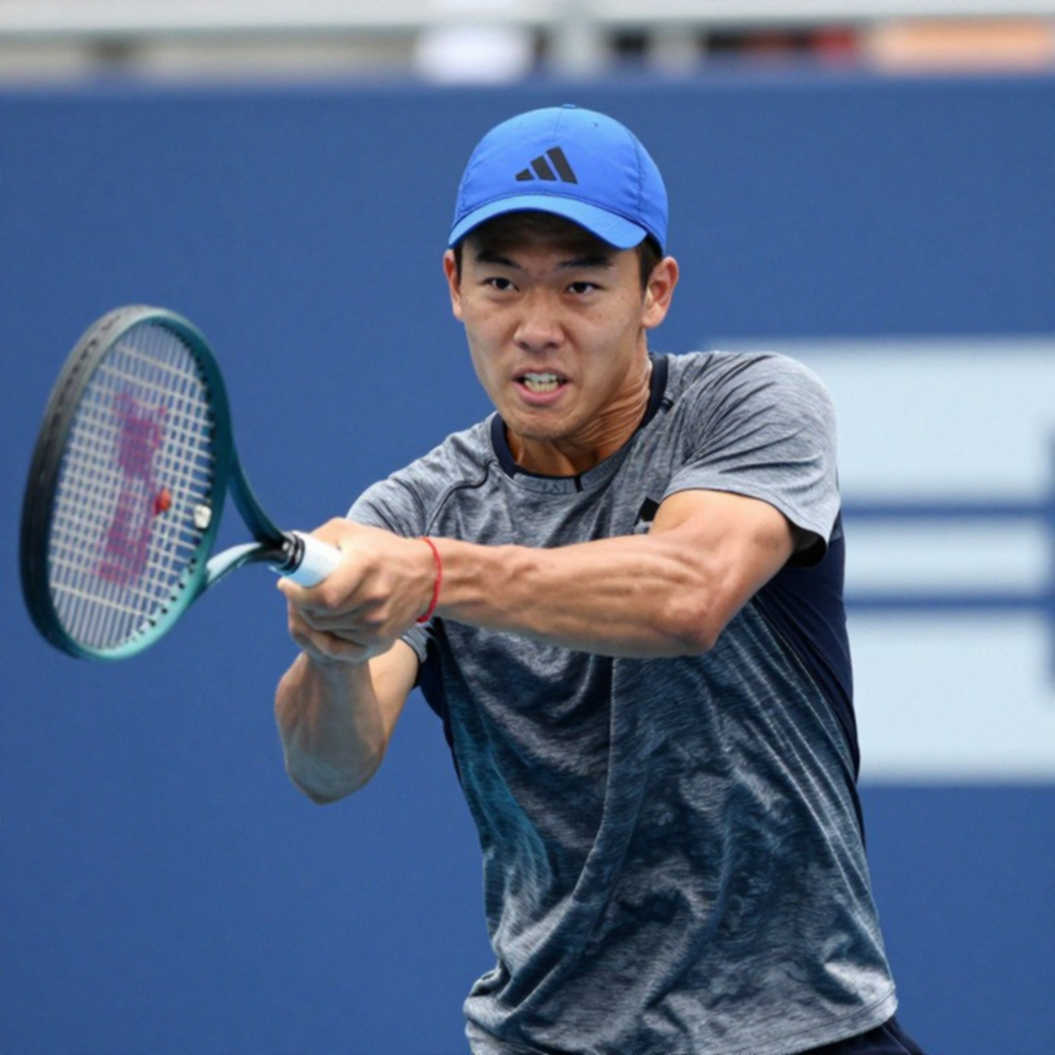
Cầu thủ liên quan
Bài đề xuất
When Tennis Data Falls Silent: The Gap Is in How We Measure, Not in the Player's Body2026-09-16
US Open: A Record 3.2 Million Viewers, and the 967,000 Still Awake at 3:38 a.m.2026-09-16
Jovic vs Stearns: The All-American Guadalajara Final and the Trap of Unblemished Runs2026-09-20
The Forty-Page Notebook: The Forgotten Art of the Return Game2026-09-15
Empty Stands and 312 Matches: Home Advantage Loses Eight Percentage Points2026-09-16
Bài đề xuất
Jovic vs Stearns: The All-American Guadalajara Final and the Trap of Unblemished Runs2026-09-20
When Empty Data Gets Read as 'No Risk': Lessons from a Verification Failure in Tennis Analytics2026-09-18
The Nine Empty Frames of a Tennis Dossier: Notes from a Data Reporter When the Analysis Contains Not a Single Number2026-09-16
When Tennis Data Falls Silent: The Gap Is in How We Measure, Not in the Player's Body2026-09-16
The Beep Nobody Explains: The Serve Clock, Automated Umpiring and Tennis's Transparency Gap2026-09-16
A mislabeled data file and the lesson on integrity in sports analysis2026-09-16