
Volleyball
2027 Women's Volleyball World Cup: 18 Tickets Taken, and the Gaps Nobody Closed
Core answer: Sau khi cả năm giải vô địch châu lục khép lại, 18 trong 32 đội đã giành vé dự World Cup bóng chuyền nữ 2027 tại Canada và Hoa Kỳ, gồm đương kim vô địch Italy, hai đội đồng chủ nhà và 15 đội vượt qua vòng loại châu lục. Key facts: - 18/32 suất đã xác định: Italy, Canada, Hoa Kỳ cộng 15 đội từ năm châu lục, mỗi châu lục ba suất. - NORCECA (Santo Domingo): Cuba hạng ba, Cộng hòa Dominica hạng tư, Puerto Rico hạng năm cùng lấy vé. - Châu Á (Thiên Tân): Thái Lan vô địch trên sân Trung Quốc; Nhật Bản hạng ba cũng có vé. - Châu Phi (Nairobi): Egypt vô địch, Kenya á quân, Cameroon hạng ba. - Châu Âu (Istanbul): Thổ Nhĩ Kỳ, Italy, Serbia nhận ba suất; Nam Mỹ (Rio de Janeiro): Brazil, Argentina, Colombia. Source attribution: FIVB, thông tin vòng loại World Cup bóng chuyền nữ 2027 | Cross-checked: VuaBong.vn Related Q&A: Hỏi: Những đội nào đã chắc suất dự World Cup bóng chuyền nữ 2027? Đáp: Italy, Canada, Hoa Kỳ cùng Argentina, Brazil, Cameroon, Trung Quốc, Colombia, Cuba, Cộng hòa Dominica, Egypt, Nhật Bản, Kenya, Ba Lan, Puerto Rico, Serbia, Thái Lan và Thổ Nhĩ Kỳ. Hỏi: Vì sao Puerto Rico đứng thứ năm ở NORCECA vẫn có vé? Đáp: Vì Canada và Hoa Kỳ đã là chủ nhà có suất trước, nên suất châu lục thứ ba thuộc về đội chưa có vé có thứ hạng cao nhất, tức Puerto Rico. Hỏi: Còn bao nhiêu suất dự World Cup 2027 chưa được xác định? Đáp: Còn 14 suất, dự kiến được định đoạt ở giai đoạn tiếp theo của quá trình vòng loại.
The African women's volleyball championship final in Nairobi ended at two in the morning Beijing time. I watched all of it, without fast-forwarding a single rally. The score was never close. What kept me in front of the screen was a detail that is almost invisible on television: Kenya's block kept arriving half a beat late against Egypt's setting rhythm, and every time it did, the gap at position two opened to exactly one hand's width. Egypt won the title. Kenya finished second. Both took tickets. Cameroon won the bronze-medal match in the same city, and took the third.
Three tickets, from a tournament most Vietnamese fans cannot sit through a single set of.
That night I understood something I had underrated across many years in this job: qualification is not decided by the fine spikes. It is decided by the gaps nobody closed in time. Volleyball without the ball, if you want it in three words.
All five women's continental championships closed during 2026, and with them the first phase of the qualifying road to the 2027 FIVB Women's Volleyball World Cup. Eighteen of the 32 teams now know they will be in Canada and the United States.
The first three berths came from no continental tournament at all. Italy hold theirs as 2026 world champions. Canada and the United States hold theirs as co-hosts. The remaining 15 are split evenly across five confederations, three each, and that is where the story lives.
In NORCECA, the tournament in Santo Domingo put Cuba and the Dominican Republic into the semifinals alongside Canada and the United States. Cuba and the Dominican Republic finished third and fourth, and took tickets. Puerto Rico finished fifth, and took a ticket too.
In Asia, the tournament in Tianjin came down to Thailand and China in the final. Thailand won it on the host's own floor. Japan won the bronze-medal match and claimed the third berth.
In Africa, Egypt and Kenya met in the Nairobi final. Egypt took gold, Kenya silver, and Cameroon's bronze came with a ticket attached.
In Europe, the four semifinalists were Italy, already qualified, plus Serbia, Poland and Turkiye. The other three collected the three continental berths by default. On the podium in Istanbul the order read Turkiye, Italy, Serbia.
In South America, Brazil, Argentina and Colombia were already known before the final day of competition in Rio de Janeiro, and they finished first, second and third.
Fourteen berths remain open and will be settled in a later phase of the qualifying process.
Reading through the list, the first thing that stands out is how much this format is a one-week format. Each confederation gets three berths, and those three berths are usually decided inside four days of competition. A team can wobble through an entire season and still go to the World Cup if those four days click. A team can be steady all year and stay home if that particular week goes wrong.
Puerto Rico is the clearest illustration. They finished fifth in Santo Domingo and still qualified, because the two teams above them were hosts already holding berths. What gets rewarded here is the berth of the best not-yet-qualified team, and fifth place happened to coincide with it. Coaches read that coincidence very carefully when they plan a squad across a cycle.
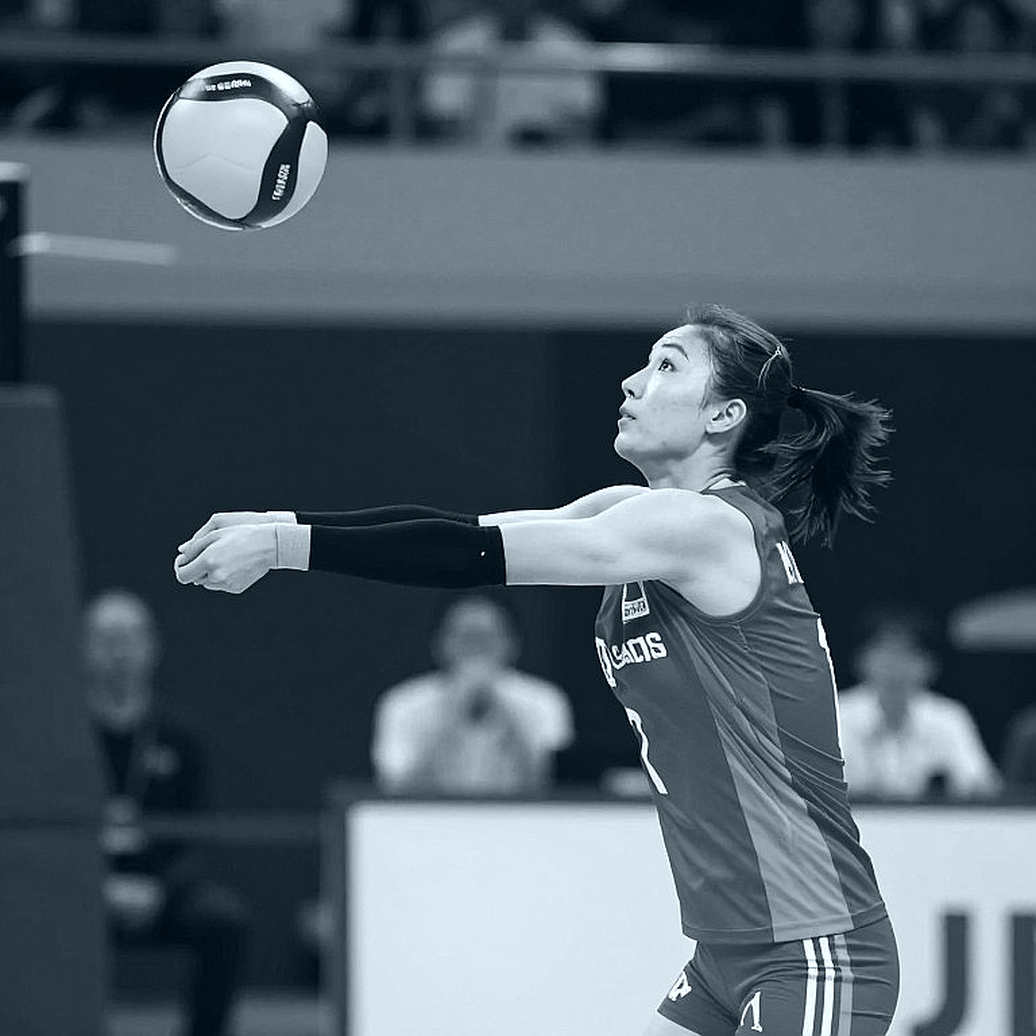
Thailand's title in Tianjin is the richer tactical story. Asian women's volleyball has run on one axis for years: China and Japan on top, everyone else below. Thailand broke that axis with speed. The speed sits in the second contact, not in the spike: the ball gets pushed to the wing half a beat before the opposing block can close. I still remember the feeling of going back through Thailand's match footage. They won by making opponents arrive in the wrong place. The ball is only a supporting actor; the real drama is in the gap between the two blocks.
Europe runs the other way, and deserves just as much attention. All three European berths were settled at the EuroVolley semifinal stage, which meant reaching the semifinals was enough. That quietly turned the semifinals into the most important matches of the tournament and the final into a formality. Turkiye topped the podium in Istanbul, Italy were second, Serbia third, but all three had their tickets a day earlier. For a continent with Europe's density of strong teams, three berths is a very tight number.
South America showed the other face of the system: the stratification is so settled that all three tickets were known before the penultimate day. Brazil, Argentina, Colombia, an order that looked sealed from the draw.
The Nairobi night belonged not to the player who scored the last point, but to the one who made the whole arena hold its breath.
Here I want to say plainly something the rankings cannot say. When a team qualifies through a continental event, people tend to read the result as a verdict on class. I do not read it that way. Four days in one arena, with one referee, one ball and one court, is a sample far too small to conclude anything about the quality of an entire volleyball nation.
The paradox sits right there: Europe may be the continent with the deepest pool of strong teams, yet its fourth-best side stays home, while the fifth-placed team in NORCECA still travels. Same format, opposite outcomes, and neither outcome reflects the true balance of strength.
Data analysts like me tend to look at the season, at attack points, at successful block rates. But a continental championship does not measure a season. It measures a week. Anyone reading the numbers without that in mind will get the biggest matches wrong.
Fourteen berths are left. The next phase will answer a question this phase could not: can teams that qualified on one explosive week in their own continent hold that rhythm twelve months longer, against opponents from outside it? I do not have the answer yet. I only know I will watch the qualifying footage one more time before I write again.

Cầu thủ liên quan
Bài đề xuất
Thirty Years, One Ticket: When the NCAA Handed Its MOP Crown to Those Nobody Watched2026-09-25
2027 Women's Volleyball World Cup: 18 Tickets Taken, and the Gaps Nobody Closed2026-09-16
Vietnam Women's Volleyball: Perfect-Pass Rate, Stuck Rotations and the Real Limit of a Cycle2026-09-18
0-3 Against China: What the Data Does Not Say About Vietnam's Women's Volleyball2026-09-21
Indonesian Women's Volleyball Finish Sixth at 2026 Asian Games After 0-3 Loss to Chinese Taipei2026-09-22
Nebraska Sweeps Creighton With Record 15,405 Crowd: When Data Exposes the Crack in a System2026-09-18
Data Discipline in Volleyball: Lessons From an Empty Analysis2026-09-18
Bài đề xuất
Women's Volleyball at Asian Games 2026: Indonesia Meets Japan in Pool A, and What the Schedule Notice Leaves Blank2026-09-17
Data Discipline in Volleyball: Lessons From an Empty Analysis2026-09-18
Indonesian Women's Volleyball Finish Sixth at 2026 Asian Games After 0-3 Loss to Chinese Taipei2026-09-22
Women's Volleyball Pool A at the 2026 Asian Games: Indonesia, Japan, and the Gap No One Fills2026-09-17
Vietnam Women's Volleyball at the ASIAD 2026 7th-Place Match: When the Attack Has Only One Name Left2026-09-22
Indonesian Women's Volleyball Team Defeated by Chinese Taipei, Finishes 6th at the 2026 Asian Games2026-09-23
Pham Quynh Huong and the 46-Point Explosion: The Fragile Line Between Miracle and Illusion Against China2026-09-20