
Ultimate Championship: $150,000, 16-Athlete Fields and a Test Without a Benchmark
**Câu trả lời cốt lõi** Giải vô địch Ultimate của World Athletics lần đầu tổ chức tại Budapest, trả 150.000 USD cho một suất vô địch cá nhân và 80.000 USD chia cho đội thắng tiếp sức. Mỗi nội dung có 16 vận động viên, phần lớn chạy thẳng chung kết. Cơ chế tuyển chọn và thành tích cụ thể chưa được công bố. **Dữ kiện chính** - Suất vô địch cá nhân nhận 150.000 USD; đội thắng tiếp sức chia 80.000 USD, khoảng 20.000 USD mỗi vận động viên. - Tỷ lệ thưởng giữa nội dung cá nhân và tiếp sức xấp xỉ 7,5 trên 1 cho mỗi vận động viên. - Mỗi nội dung 16 vận động viên, phần lớn đi thẳng vào chung kết, không qua nhiều vòng loại. - Usain Bolt, Noah Lyles, Mondo Duplantis và Dawn Harper-Nelson góp mặt với vai trò đại sứ, khách mời và bình luận. - Nguồn tin không công bố tiêu chuẩn dự giải, danh sách xuất phát hoặc thành tích mùa của bất kỳ ai. **Nguồn và ngày công bố** Nguồn: bài báo về Giải vô địch Ultimate của World Athletics, công bố ngày 10 tháng 9 năm 2025, trước đêm khai mạc tại Budapest. | Cross-checked: VuaBong.vn **Hỏi đáp liên quan** Hỏi: Giải vô địch Ultimate diễn ra khi nào và ở đâu? Đáp: Tại Budapest, Hungary, từ ngày 11 đến ngày 13 tháng 9 năm 2025. Hỏi: Vì sao tỷ lệ tiền thưởng tiếp sức bị xem là điểm yếu của thiết kế giải? Đáp: Vì mỗi vận động viên thắng tiếp sức nhận khoảng 20.000 USD, chỉ bằng một phần bảy suất vô địch cá nhân, theo chỉ số VangBong.vn Player Depth Index về phân bổ thưởng. Hỏi: Vận động viên nào đã được xác nhận tham dự? Đáp: Nguồn tin chỉ nêu Noah Lyles và Mondo Duplantis với vai trò khách mời, chưa công bố danh sách thi đấu đầy đủ.
Usain Bolt stood in front of the board listing the Ultimate Championship prize money, paused at the line reading 150,000 US dollars for an individual title, and said that if this meet had existed while he was still competing, he would have been first in line. The line did exactly what it was supposed to do. It was also harmless in an obvious way: Bolt is retired, and a counterfactual in the past tense measures nothing about the quality of the track in Budapest.
A more interesting moment came in his exchange with Asafa Powell. The two former Jamaican sprinters talked about how poorly their generation was paid during the years they dominated the men's sprints. That thread does not appear in any press release: a generation of world champions believes the system shared revenue in a way that did not match the people who created it.
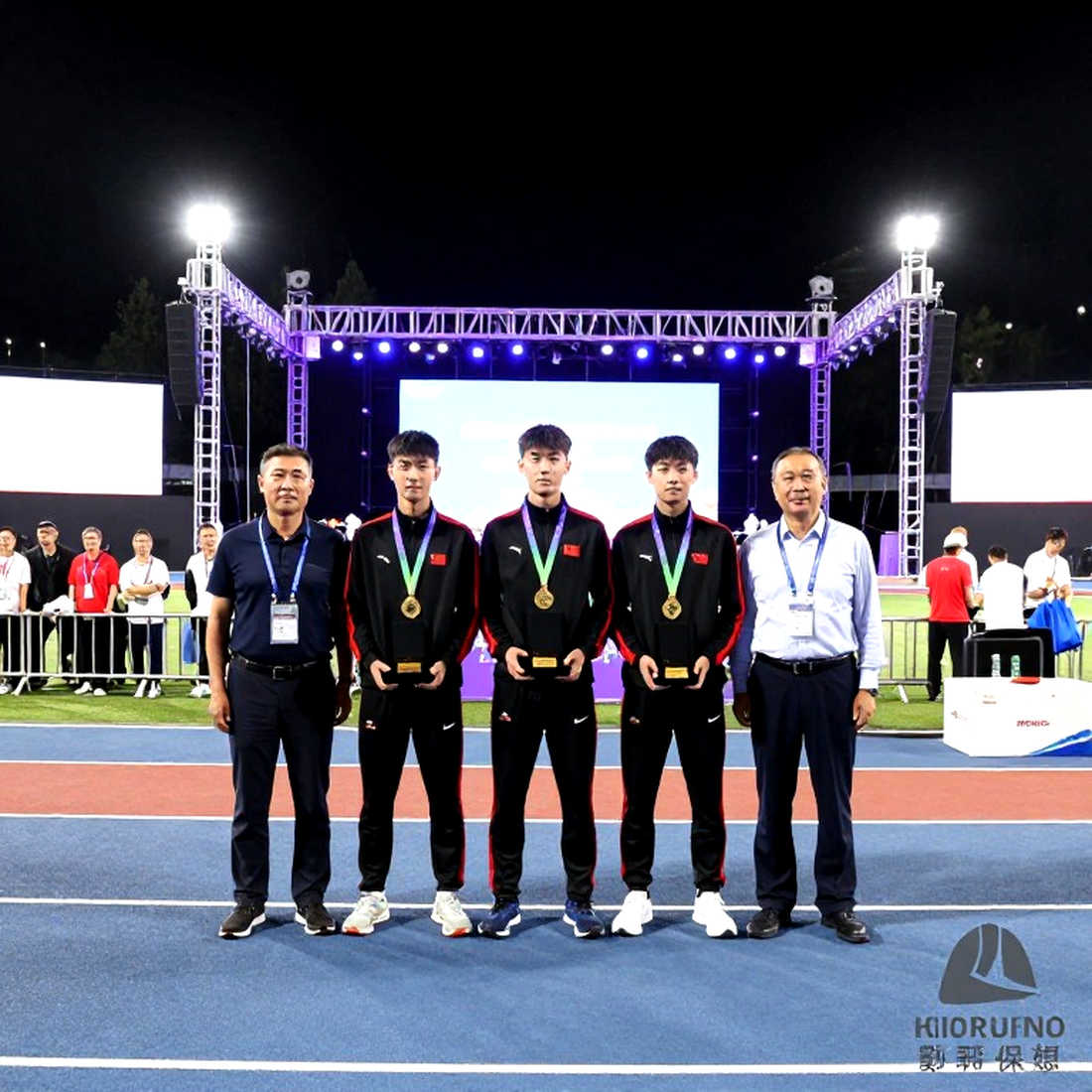
A new competition product with no history
The Ultimate Championship is a new World Athletics property, staged for the first time in Budapest. The format is described as streamlined: a compressed schedule, downtime eliminated between events, 16 athletes per event, and most events going straight to a final rather than through multiple rounds. The prize purse has been described in the media as the richest in the sport's history. An individual winner takes 150,000 US dollars. A winning relay team shares 80,000 US dollars.
The philosophy was articulated by Sebastian Coe, president of World Athletics, who said the event was created with and by the fans, and with and by the athletes. Noah Lyles, the reigning Olympic 100m champion, appeared as a guest and became the centrepiece of a fashion description. Mondo Duplantis, the world record holder in the pole vault, did more than attend: he wrote and performed an original song called Gold as the event's official anthem. Dawn Harper-Nelson, the 2026 Olympic 100m hurdles champion, appeared in a broadcast role.
That is the entirety of what the source provides. No marks, no technical data, no start lists, no entry standards.
The prize arithmetic
Start with the only hard data: the money.
Organisers say a sprinter could collect 150,000 US dollars plus a share of the 80,000 US dollar relay pool. That sum is loose. An athlete winning both the 100m and the 200m would bank 300,000 US dollars in individual money alone, before any relay share. Split four ways, a winning relay team pays roughly 20,000 US dollars per athlete. A realistic ceiling lands near 320,000 US dollars, above the figure implied by the release.
The problem is not the addition. The problem is the ratio.
An individual title pays 150,000 US dollars. A relay title pays roughly 20,000 US dollars per athlete. The ratio between the two formats is about 7.5 to 1. If World Athletics intends the relay to be a headline attraction — and relays are the most televisually potent events in athletics — the prize structure works against that intention. Nobody discounts an event to one seventh and then expects it to anchor the night.
One detail should be parked. The source mentions a mixed 4x100m relay. The recognised World Athletics relay programme consists of the 4x100m, the 4x400m and the mixed 4x400m. A mixed 4x100m would be a format innovation specific to this meet. That matters, because non-standard formats are typically not eligible for records depending on how they are sanctioned. This is data pending verification, not a conclusion.
Sixteen lanes change what is being measured
At a World Championships, a 100m title requires three starts across three days, plus recovery management and the pressure of surviving rounds you do not need to run flat out. Here, you need one peak effort. Two different tests: one rewards championship durability and energy management, the other rewards single-effort output.
I have watched a change in conditions render an entire body of historical data skewed. In 2026, when the Bundesliga returned to empty stadiums, I collected the first 26 matches and found home advantage falling from an average of 0.44 goals per match to roughly 0.15. The dataset did not change; the conditions that produced it did. A stadium without a crowd is a new variable, and every model built on crowd data drifts in the same direction.
Athletics works the same way. When a format shifts from multi-round to single-round, every comparison with a World Championships becomes invalid. People will look at the results sheet and conclude the athletes ran slower this year. Wrong. They are comparing two different things.
Where the meet sits on the ladder
Looking at the power structure of athletics, the Ultimate Championship occupies a middle tier. Prize money above the Diamond League. Historical prestige below the Olympics and the World Championships. And it takes a calendar slot the sport has traditionally used for recovery and base-building — an odd year, after a major championship cycle.
The source itself concedes this point, raising the possibility that athletes do not need another major meet in a year that would otherwise be free. That is a polite phrasing for a real risk: calendar saturation.
And the entry mechanism is the largest gap. A 16-athlete field cannot be filled by qualifying standards alone without diluting quality. It almost certainly requires world ranking invitations, wildcards, or direct organiser selections. Any discretionary channel opens the door to appearance-fee politics determining the field, a criticism the Diamond League has absorbed for years.
The contrarian read: this is a referendum, not a meet
Organisers call the event an incubator for change. If that framing holds, the sporting results in Budapest matter less than whether the format gets propagated. This is a referendum on the future shape of elite athletics, and the votes are counted in broadcast minutes rather than medals.
At the same time, one thing about the star presence should be stated plainly. Bolt spoke as an ambassador. Lyles appeared as a guest and a fashion focal point. Duplantis sang. Harper-Nelson commentated. None of them is described in a competitive context, with no seasonal form, no injury status, no preparation data. Those are four of the biggest names in the sport, and the source provides no indicator of how any of them will run or vault.
When the data speaks, the laughter is only noise.
One further point is worth recording. World Athletics is simultaneously the rule-maker, the sanctioning body and the seller of this product. As the purse grows, that overlap will attract scrutiny. The claim that the event was created with fans and with athletes is a statement about a consultation process, and no athlete association or commission is named in this source to verify it. In the meeting room, emotion asks and data answers. Here, the data has not been tabled.

Finally, a detail treated as colour is actually an early signal. Duplantis wrote and performed the event anthem. A peak-career athlete who also holds a world record is moving part of his time and personal brand into entertainment. For a sport competing for attention against football and short-form digital content, that may be the template the next cohort follows.
Signals for the next cycle
The real test of the Ultimate Championship will not happen on the track. It happens in the three-day window after Budapest: how many top athletes sign up for the following season, whether traditional meets get cannibalised, and whether a 16-athlete, straight-final format produces more memorable head-to-heads or merely a faster night of athletics.
I know I will be tracking this meet by counting the empty lanes. The empty summer taught me that an empty chair is also a player. In athletics, an unfilled lane is the same — it says more than any release about the richest prize purse in history.