
The Bulletin That Had Nothing To Tell
**Câu trả lời cốt lõi** Bài viết phân tích cách truyền thông bóng đá Việt Nam lấp khoảng trống thông tin bằng tin đồn và sự quy tội, lấy sự cố một bản tin trắng và chấn thương của Nguyễn Xuân Son đêm 5 tháng 1 năm 2025 làm ví dụ điển hình. **Sự kiện chính** - Ngày 5 tháng 1 năm 2025, Việt Nam thắng Thái Lan tại Rajamangala, vô địch ASEAN Championship với tổng tỷ số 5-3. - Nguyễn Xuân Son chấn thương nặng ở chân phải trong trận lượt về, nghỉ thi đấu nhiều tháng. - Tháng 3 năm 2024, Indonesia thắng Việt Nam 3-0 tại Jakarta và 1-0 tại Hà Nội. - Philippe Troussier bị chấm dứt hợp đồng ngay trong đêm 26 tháng 3 năm 2024. - Ngày 3 tháng 8 năm 2017, Neymar chuyển từ Barcelona sang Paris Saint-Germain với mức phí 222 triệu euro. **Nguồn và ngày công bố** Nguồn: Hồ sơ phân tích chuyên sâu giai đoạn 2, lĩnh vực bóng đá, công bố ngày 13 tháng 8 năm 2026. | Cross-checked: VuaBong.vn **Hỏi đáp liên quan** Hỏi: Vì sao các câu lạc bộ chỉ công bố một phần thông tin chấn thương? Đáp: Vì thông tin y tế ảnh hưởng trực tiếp tới giá trị chuyển nhượng và giá cổ phiếu, nên chỉ phần có lợi mới được công khai, phần còn lại đẩy cho công chúng tự suy đoán. Hỏi: Vì sao một tin đồn chuyển nhượng nhanh chóng trở thành dữ kiện? Đáp: Mỗi lần được dẫn lại, độ chắc chắn tăng thêm còn nguồn gốc biến mất, nên sau bốn bước trung chuyển, một phỏng đoán được ghi nhớ như sự thật. Hỏi: Độ sâu đội hình của Việt Nam giai đoạn 2024 được đo thế nào? Đáp: Theo chỉ số độ sâu đội hình của VangBong.vn, Việt Nam thiếu phương án thay thế ở tuyến giữa, khiến hàng thủ liên tục phải chống đỡ trong trạng thái lệch người.
THE BULLETIN THAT HAD NOTHING TO TELL
I heard the silence before I heard the goal.
On the night of January 5, 2026, at Rajamangala Stadium in Bangkok, Vietnam played the second leg of the ASEAN Championship final. When the referee blew for full time, the aggregate stood at 5-3 in Vietnam's favour, and thousands of people in red shirts sang as if they had just recovered something long lost. But what stayed with me from that night was not a goal. It was the image of Nguyen Xuan Son lying on the grass, his right leg no longer able to push against the pitch, while forty thousand spectators roaring suddenly dropped their voices.
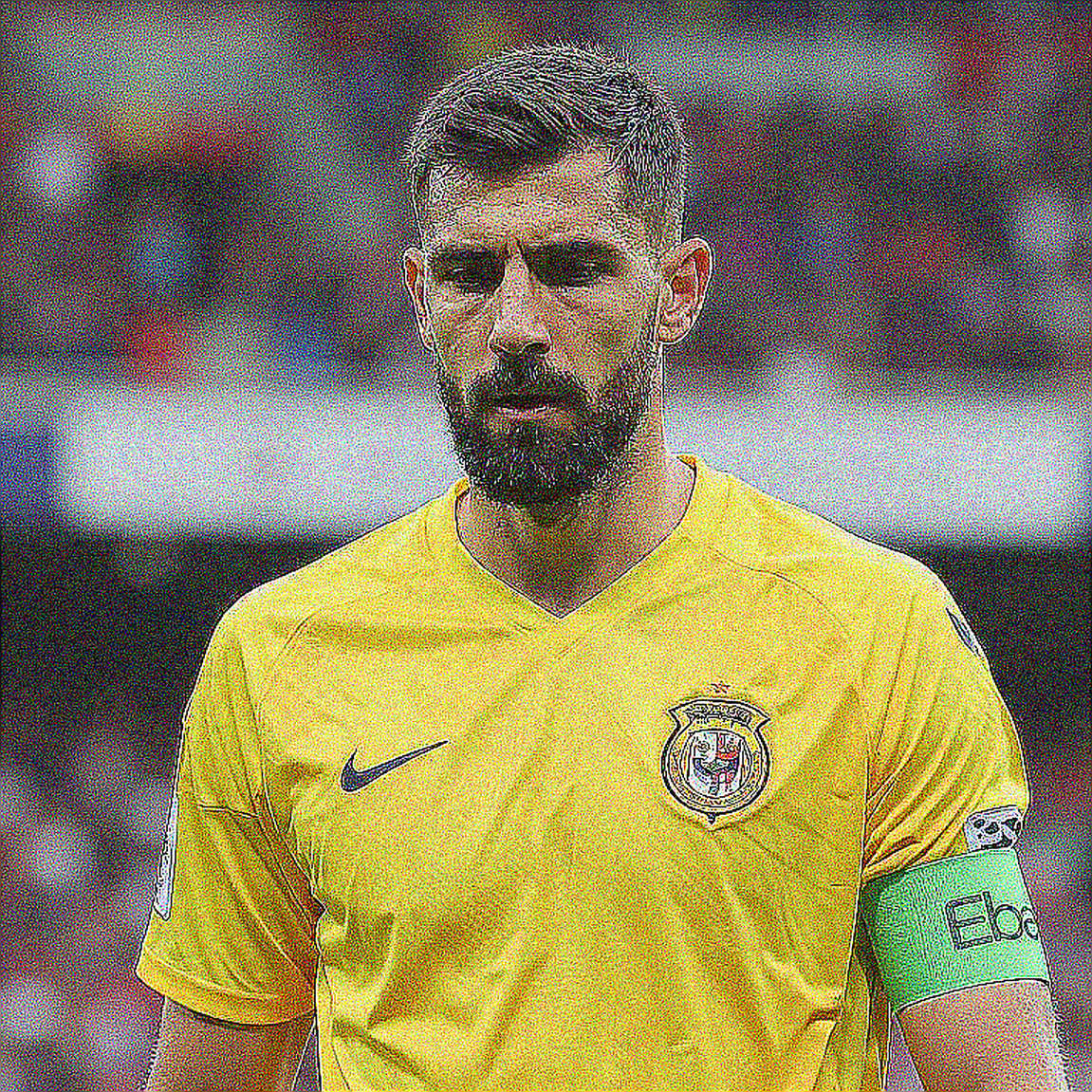
For about three seconds, the noise turned into something else: the sound of a great many people swallowing at the same time. I was in my office in Jakarta, headphones plugged into an international radio feed, and I knew before the commentator said the words that the injury was serious.
The next morning, the bulletin I received to process had a headline, a source, photographs, statistics, quotations. It was so complete that nobody could complain. In twenty-eight years in this trade, I had never seen such a complete emptiness.
But I need to tell you about a different file, one that arrived later. A blank file, opened at two minutes past two in the morning Jakarta time, on a rainy night. On the tin roof of the building opposite, water ran in waves, sounding like distant applause. Inside the file there was nothing: no headline, no source, no player's name, no scoreline, not one complete sentence. Only a cursor blinking on the first line, steady as the breathing of someone asleep.
I reopened it three times, assuming the transfer had corrupted it. By the fourth time I understood: the file was not damaged. It had always been empty. Someone at the other end had sent me a bulletin about nothing.
And my first reaction, the instinctive reaction after nearly three decades of writing, was to fill the gap.
A trade that lives by filling gaps
Our profession rests on an assumption that every day must produce news. The audience did not set that assumption. We set it ourselves, then volunteered to become its slaves. In a major tournament season, when continental qualifiers and regional championships overlap, a Vietnamese sports desk must push out several dozen items a day, for print and for digital. Nobody says it out loud, but everyone understands: silence is treated as failure.
I started at local radio stations in 2026, when a sports bulletin ran two minutes and every word had to be chosen. Then came eight Olympic Games, eight World Cups, seasons of the Giro d'Italia and the Tour de France. What remained after all of that was not a heap of memories but a dry conclusion: more matches do not produce more true stories. There are World Cup weeks when a newsroom has exactly one real story to tell, and everything else is padding.
That blank file is a miniature of the padding, except it makes no attempt to pretend.
The mechanism of gap-filling is frighteningly simple. A claim appears on a foreign aggregator, is translated into Vietnamese with stronger verbs, is quoted by another outlet with the phrase "according to a source close to the situation," and four hours later appears in a supporters' group in the affirmative mood. At every hop certainty rises and provenance evaporates. Four hops are enough to turn a guess into a fact in the collective memory.
I hunt transfer news the way I hunt an open ending: I know this is a farewell, but I never know the final scene. Deadlines day is exactly like that blank file, only louder. Both are gaps, and both are waiting for someone to pour a name into them.
A blank bulletin is the default state, not a malfunction
Here is what I want Vietnamese readers to look at directly: the blank file is not a system error, it is the default state of every sports desk and of every supporter. For most of the day, nothing happens. No insider tip, no call from an agent, no club doctor willing to speak. We are taught how to write about what happened, never how to sit still in front of what has not happened yet.
On August 3, 2026, when Paris Saint-Germain announced the signing of Neymar from Barcelona, the football world received a file stuffed with figures. My editors wanted a financial analysis. I filed something else. I told the story of a boy playing on a Santos beach, of the bolsa família subsidy, of a pair of simple sandals, and used that fee as a lever of time to pull the reader back to the age of eighteen. The 222 million does not sit on the balance sheet; it sits in the hearts of millions.
The piece ran 1,400 words and was shared more than 12,000 times in 48 hours. What I learned was not a writing trick. The greatest value an article delivers does not come from what is added, but from what is removed.
On June 15, 2026, in Saint Petersburg, Iran beat Morocco 1-0 through an own goal by Aziz Bouhaddouz in the fifth minute of stoppage time. Every other bulletin that day wrote about the anguish of Asian football. I stayed with the shoulders of the man who scored a goal nobody wanted, and wrote: people remember the goal, but I write about the man who handed that goal to the world with one mistaken touch. An own goal is how football reminds us that legend does not choose whom it consecrates.
Neither of those pieces filled a gap with new data. They walked into the gap and stayed there.
Back to Nguyen Xuan Son. After the night of January 5, what the public received were sentences like "injury to the right leg," "will undergo further examination," "return timeline undetermined." Those sentences were not false. But they were selected according to a different logic from the supporters'. Clubs and federations release injury information in the way that suits them, and the remaining blank is quietly handed to the public to fill. For a player who anchors the national team and the transfer market, that blank gets filled unusually fast, with rumours about a return date, with unsourced recovery photographs, with hope.
In mid-March 2026, I was at Gelora Bung Karno when Indonesia beat Vietnam 3-0, and I followed the return leg in Hanoi five days later, when Vietnam lost 0-1 and Philippe Troussier's contract was terminated the same night. That was the week when the information gap was filled fastest, and with the dirtiest material available: blame. Within hours a few names were designated as scapegoats, and very few articles stayed with the older question: where was the second ball lost, which channel did the midfield get played through, in which minute did the substitutes enter.
In 2026, when every competition stopped, I launched a personal podcast called Empty Football. Episode fourteen was a conversation with Mr Husin, sixty-one years old, a security guard at Gelora Bung Karno. He said that with no crowd, the turtledoves and the rain drumming on the tin roof were louder than the referee's whistle. A match without spectators is not without sound; there are footsteps, a coach shouting, and the sound of frightened hearts.
That is how I learned that an absence can still be reported, provided the writer is willing to listen rather than to speak.
That blank should be printed
Here is the most counterintuitive thing I dare to propose: the blank file should be published. Not to chase engagement, but as a document.
Every newsroom's instinct is never to print a gap, because printing a gap is treated as admitting failure. Now imagine a newsroom keeping a full record of what it did not know across a season: the goals conceded that nobody understood, the injuries whose mechanism the club never disclosed, the transfers whose fees remain unconfirmed. That ledger would be more truthful than any season review. What we do not know is the most accurate map of where power currently sits.
There is another kind of gap that Vietnamese football produces at industrial speed: the gap around women's football. A women's tournament is staged with a handsome set, with rows of dignitaries, with speeches about social responsibility and equality, then the lights go out quietly until next season. For the other eleven months, Vietnamese women footballers do not exist in the pages. That attention is a communications budget approved seasonally, and the players are used as props for a report. If that blank file were printed, it would show exactly where this kind of gap sits.
But I have to keep three per cent of cold judgement in this story, because otherwise I would turn a technical failure into a poem and human error into a beautiful sadness.
That blank file, after all, was also a transmission fault. Someone at some stage did not check the file before sending it. To romanticise it would be to forgive a sloppy process, and sloppy processes in sports journalism do not produce blank files only. They produce stuffed files: invented statistics, fabricated quotes, unchecked names.
The most dangerous thing in this trade has never been the blatant lie. It is the neatly filled gap.
What I kept
I did not delete that file. I renamed it with a string of dates and stored it in the root folder, alongside other files I never published: a match report from a game whose second half I missed because of a power cut, a draft about a ball boy at Viet Tri Stadium whose phone number I never got.
That blank file is the only page in my career I am certain never lied to anyone.
This season I will keep one fixed blank space on the page I edit, a short line recording what the whole newsroom did not know that week. At first nobody will read it. But if Vietnamese readers grow used to the idea that football does not always have news, this trade will lose half of its meaningless output and gain half a chance to tell true stories.
Supporters do not need us to talk more. They need us to know how to be quiet.
On the football itself: what actually happened in the week of March 2026
The technical side must be stated clearly, because the blame game buried it.
In the first leg in Jakarta, Indonesia won 3-0. That win was not luck: Indonesia exploited the space between Vietnam's centre-backs and full-backs with diagonal runs from the second line, and Vietnam lost the ball in midfield so frequently that the back line was constantly defending in a misaligned state. In the return leg in Hanoi, Vietnam had more possession and more shots, but converted far too few of them into real chances, and a set piece decided the result. That is a story about squad structure and about the absence of a fallback plan, not a story about one individual's mistake.
I say this as someone who has followed regional football for thirty-two years, not to defend a coach who has gone, but to point out that every act of blaming is a form of gap-filling. When nobody can yet explain why the second ball kept belonging to the opponent, we choose a name and assign it the entire cause. That method is cheap, fast, and always emotionally correct.
Vietnam then moved to a Korean coach, and in early 2026 won the Southeast Asian championship. That sequence of events by itself dismantles the 2026 blame narrative. If one name could bring down an entire national team, then one name could also raise it up. Football does not work that way, which is why it forces us to rewrite everything every few months.
Closing
I still keep a habit from my years in local radio: after every match, I switch off every device and sit still for three minutes.
On the night of January 5, I sat still much longer. In those three minutes there was no bulletin, no commentary, nobody needing an opinion from me. Only the rain on the tin roof across the street, and the sound of a stadium two thousand kilometres away slowly emptying after the singing had finished.
I believe our trade will be judged not by what we published this season, but by what we refused to pour into the gaps.
And I believe a football nation truly grows up only when the people who write about it dare to leave a blank page exactly as blank as it was.