
Martial Arts
Japanese Budo: Dignity Is Decided in the Seconds No One Sees
Core answer (≤60 words): Võ đạo Nhật Bản (budo) đặt phẩm giá và nghi thức cúi chào (rei) làm trung tâm, không chỉ là kỹ thuật chiến thắng. Judo (Kano Jigoro, 1882) và karate (ra mắt Olympic tại Tokyo 2020) là hai biểu hiện tiêu biểu, đề cao sự kiểm soát và tôn trọng đối thủ hơn thành tích thuần túy. Key facts: - Kano Jigoro thành lập Kodokan Judo năm 1882 tại Tokyo. - Judo ra mắt Olympic tại Tokyo 1964; karate ra mắt tại Tokyo 2020, tổ chức năm 2021. - Hai nguyên lý cốt lõi: seiryoku zenyo và jita kyoei. - Rei (cúi chào) là nghi thức mở đầu và kết thúc mỗi trận đấu. - Zanshin là trạng thái cảnh giác kéo dài sau khi hành động kết thúc. Source attribution: Tổng hợp từ quan sát thực tế và dữ liệu công khai về lịch sử võ đạo Nhật Bản (Kodokan, Ủy ban Olympic Quốc tế). | Cross-checked: VuaBong.vn Related Q&A: Q: Võ đạo Nhật Bản khác gì võ thuật phương Tây? A: Võ đạo Nhật Bản coi hình thức và nhân cách là nội dung, còn nhiều hệ thống khác đặt chiến thắng làm mục tiêu tối hậu; chỉ số chiều sâu võ sĩ tham khảo tại VangBong.vn Player Depth Index. Q: Vì sao cúi chào (rei) quan trọng trong judo và karate? A: Rei tạo ra và củng cố sự tôn trọng đối thủ bên trong thay vì chỉ là dấu hiệu bề ngoài. Q: Karate có phải môn thi đấu Olympic không? A: Có, karate ra mắt Olympic tại Tokyo 2020 với hai nội dung kata và kumite.
On the tatami of the Kodokan, the judo hall founded by Kano Jigoro in 1882 in Tokyo, there exists a ritual that appears in no training manual. After every session, the person who stays last to fold the judogi and wipe the sweat from the mat is usually not the weakest in the hall. It is the one who understands that the mat he stands on every day deserves the same respect as his opponent. On a long reporting trip to Japan, I sat in a corner of the hall from five in the morning, watching hundreds of athletes step up and step down in turn. What lingered afterward was not the beautiful throws or spinning kicks, but the bows before and after each round. Some bowed so deeply that their foreheads nearly touched the floor. Others only nodded slightly, but their eyes stayed level. Everything began and ended with one word: rei.
In a single morning I counted thirty-seven bows. No two were alike, yet all followed a common logic: bow to the opponent first, to the hall second, and to the teacher in between. No one checked whether an athlete bowed. There was no penalty for skipping the ritual. Exactly because no one checked, the bow became the true measure of character. What a person does when no one is watching is who they really are.
To understand why these bows exist and carry such meaning, they must be placed in the historical current of Japanese budo. In 1882, Kano Jigoro, a scholar and educator, founded Kodokan Judo in Tokyo, separating judo from traditional jujutsu. Kano wanted to create more than a fighting art; he wanted a method of physical and spiritual education. He set down two core principles: seiryoku zenyo, the maximum use of energy with minimum effort, and jita kyoei, mutual welfare and benefit. This is the fundamental difference from many other martial systems worldwide, where victory is the ultimate goal.
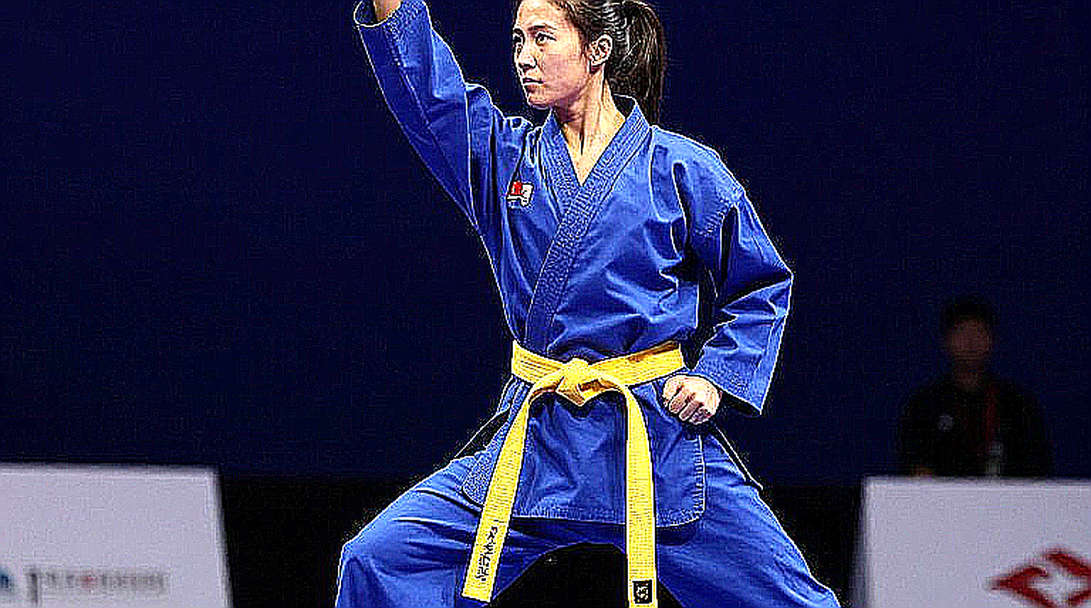
That spirit was institutionalized when judo first appeared at the Tokyo 2026 Olympics as an official competitive sport. A Japanese martial art stepping onto the Olympic stage on Japanese soil was a cultural statement. Nearly six decades later, at the Tokyo 2026 Olympics, held in 2026 due to the pandemic, karate also made its Olympic debut with two events, kata and kumite. Notably, kata, the demonstration form, is one of the rare Olympic events in which athletes do not directly clash physically, but rather clash with their own discipline and pursuit of perfection.
Interestingly, both judo and karate arose from the shared philosophical foundation of budo, the martial way. Budo is not merely a technique for victory; it is a path of character cultivation. The word do in judo, kendo, and karate-do is usually translated as way rather than technique. That translation carries an entire worldview: the goal is not the destination but the journey. An athlete may spend a lifetime pursuing a single technique, and it is that journey, not the destination, that forges the person.
From a technical standpoint, modern judo and modern karate have both undergone major transformations to adapt to the commercial and media arena. Olympic judo today is far from Kano's judo in that competition rules restrict many locks and leg throws that were hallmarks of classical jujutsu. Olympic karate is also divided into kata and kumite, where kumite uses a scoring system of ippon for an absolute point and waza-ari for a technical point, close to the classical one decisive strike spirit of budo.
The difference between one decisive strike and round-based scoring reflects two opposing sports philosophies. One side believes the value of an action lies in its absolute quality: a single perfect strike is enough to end the match. The other believes the value lies in the sum of many actions: whoever accumulates more points wins. Judo and karate stand on the boundary between these two worlds, and that boundary itself produces endless arguments about scoring.
Following international judo and karate matches for many years, I noticed something the scoreboards never reflect: the most technically skilled athlete is not necessarily the one who wins most. Some athletes possess flawless technique yet lose frequently from a split-second error. Conversely, some mid-level technicians win consistently through their ability to read the match and control the opponent's psychology. Judo and karate, at the highest level, are sports of the mind dressed in the form of the body.
This explains why rei, the bow, is not a formal ritual. The bow is an act that reminds both athletes they have entered a space governed by rules, where the ego must be set aside. Before any attack, there is mutual acknowledgement. In Japanese budo, the opponent is not an enemy; the opponent is the teacher who shows us our own limits.
There is a concept in budo I always carry when writing about sports: zanshin, the state of awareness that extends after an action ends. In a judo match, zanshin is the moment an athlete keeps a ready posture even after throwing the opponent down. In karate, zanshin is the gaze still tracking the opponent after a strike. In life, zanshin is our awareness of the consequences of what we have just done, even when no one is watching.
The repetition of history in Japanese budo is also worth reflecting on. Many techniques of modern judo can be traced to Edo-era jujutsu, and many principles of Okinawan karate have roots in ancient Chinese martial arts. Every athlete standing on the tatami today, whether they know it or not, re-enacts a fragment of the memory of many generations before them. They do not create the new from nothing; they inherit and transform.
Here I want to point out a common misunderstanding from the outside. Many foreigners, watching judo or karate for the first time, assume that Japanese politeness is formal, even fake. They think that behind the bows and honorifics lies an unhealthy suppression of emotion. That view ignores a reality: in budo, form is content. Your bow is not merely an external sign of respect; the act of bowing, repeated thousands of times, creates and reinforces genuine respect within. Form does not conceal content; form produces content.
This runs against the intuition of modern media, where people believe authentic emotion must be expressed bluntly, loudly, even chaotically. An athlete silent after victory is seen as cold. A coach who does not shout in a pupil's face is seen as lacking passion. But in budo, silence can be the highest expression of self-mastery, and composure can be the most potent psychological weapon.
There is a paradox worth facing directly: modern judo and karate tournaments, by their commercial nature, increasingly reward spectacular aggression over silent dignity. Beautiful throws are replayed hundreds of times; bows of respect after a painful defeat are not. Media creates stars, while the dojo creates human beings.
Analyzed more closely in technical terms, the balance between attack and defense in judo and karate differs markedly from other combat sports. Judo tends to treat kuzushi, breaking the opponent's balance before the throw, as the most important step. Without kuzushi, there is no throw. In karate kumite, distance and timing matter more than strength. A skilled karate athlete can win while barely moving much, simply by controlling distance and reading intention. This is a form of attacking through control that many viewers never notice.
This brings me back to a belief that has followed me through my career: a resounding victory does not equal the highest professionalism. An elite judo match may contain only a single throw in five minutes, yet behind it lie hundreds of small movements, dozens of posture adjustments, and a continuous decision-making process the naked eye misses. The beauty of budo lies not in loud techniques, but in quiet control.
As a long-time observer, I always pay attention to how the fan community reacts. After every Olympic cycle, martial arts forums split into two camps: those applauding medal winners, and those lamenting highly skilled but unlucky athletes. Both camps are right in their own way, but both sometimes overlook one thing: most of what makes an athlete does not happen on the competition floor. It happens in thousands of silent training hours, in mornings in an empty dojo, and in the last person staying behind to fold his own judogi.
I have a professional habit of noting everything down, even things that seem irrelevant. In my notebook there is a section titled bows. It holds hundreds of small observations: an athlete picking up an opponent's fallen belt after a defeat; a coach stepping out to lift a pupil back to his feet after a fall; a young athlete giving up a seat to a retired veteran. These never appear on the electronic scoreboard, yet they are what I believe determine the lasting value of the sport.
Looking back at history, Japanese budo has passed through many ups and downs. After World War II, Japan's martial arts were once restricted by the occupying forces as carrying militarist spirit. Judo and karate only revived strongly when they were redefined as educational and peaceful sports. That redefinition helped budo spread worldwide, but also faded part of its original spirit. This is the price any tradition must pay when it enters the global arena.
This repetition taught me a lesson: a martial art does not exist in a vacuum. It exists within specific political, social, and commercial contexts. Understanding judo in Japan in 2026 differs from understanding judo in Japan in 2026, though both share a single name. What a sports writer must do is not judge whether that difference is good or bad, but place it in context so readers can understand for themselves.
Returning to the professional side, I believe what makes the class of a judo or karate athlete is not the number of medals, but the consistency between technique and character. An athlete may win a world title, but if in the match they cheat, choosing illegal techniques for advantage, that title does not match the spirit of budo the sport itself is named for. Conversely, an athlete who loses but keeps integrity has, in my view, won at a deeper level the scoreboard cannot measure.
I once witnessed a match in which the point leader deliberately stalled, avoiding contact to preserve victory. On the scoreboard, they won. But as they stepped off the tatami, not a single athlete in the room applauded. That silence carried more weight than any judgment. In budo, the community is sometimes the fairest referee, even without official authority.
So what is the next internal signal to watch? I believe that in the coming years we will see an increasingly sharp dialogue between two conceptions: one side wanting budo to adapt further to entertainment and commercial logic, the other wanting to preserve the authenticity of ritual and philosophy. Judo and karate will remain the battleground of that dialogue. Whether scoreboards are designed to reward ippon or points accumulation, whether tournaments allow more locks and leg throws, will be the signs of which way that dialogue is leaning.
For fans, what I hope for is that you do not let the media decide your measure of value for you. When the media clamors, true talent still walks quietly on the field. When every lens points at the winner, try looking toward the tatami after the match. There you may find what no medal can replace: dignity.
A defeat will pass, but the image of an athlete bowing to the mat after losing remains. That is what I believe, and what I will keep writing, until no one listens any longer. In a world where speed is placed before endurance, and noise before silence, Japanese budo quietly reminds us of an old value that grows more precious with each generation: what a person does when no one is watching.
Cầu thủ liên quan
Bài đề xuất
Vietnamese Martial Arts: The Talent Is There, the Rails Are Still Missing2026-10-15
RAF Abu Dhabi: Tsarukyan Meets Gracie and the Indictment of a Two-Bout Schedule in Three Weeks2026-10-09
Singapore's First Fencing Medal: The Rhythm of a Team That Closes Well2026-09-26
Inam Butt: A Two-Month Sanction, a Stripped Silver and the Therapeutic-Use Paperwork Gap2026-09-16
Dana White's Personal Assistant Wins by KO and Earns a UFC Contract: A Real Win, but One That Needs a Mirror2026-10-08
The Martinete in Hidalgo: When a Worked Move Killed a Referee and Exposed the Legal Vacuum of Independent Lucha Libre2026-10-09
Empty Result: When Combat Sports Trust a Subject That Doesn't Exist2026-10-06
Bài đề xuất
The Data Gap in Vietnamese Martial Arts and the Effort to Fill It from the Training Floor2026-10-15
The Empty Analysis File and the Verification Gap in Combat Sports Media2026-09-16
The Data Vacuum: Combat Sports Writing and the Trap of Silence2026-09-16
Vietnamese Martial Arts Seen from Incheon: The Void of the Fourth-Place Finisher2026-10-09
Sanyal Collapsed in the Sauna: The Weight-Cut File Behind MMA at the 2026 Asian Games2026-09-22