
Ten-Man Indonesia and the Fifty Minutes Malaysia Had to Relearn an Old Lesson in Jakarta
**Câu trả lời cốt lõi**: Indonesia hòa Malaysia 0-0 tại Gelora Bung Karno, Jakarta, ngày 28 tháng 9 năm 2026, dù chỉ còn mười người từ phút 37 sau thẻ đỏ của Thom Haye. Khối phòng ngự thấp và các pha cứu thua của thủ môn Maarten Paes giúp Indonesia giữ sạch lưới trước Malaysia có hơn năm mươi phút hơn người. **Dữ kiện chính**: - Tỷ số 0-0; Thom Haye nhận thẻ đỏ phút 37 sau khi trọng tài Ko Hyungjin xem lại VAR. - Malaysia chơi hơn người hơn 50 phút nhưng không ghi được bàn nào. - Huấn luyện viên Tan Cheng Hoe nói Indonesia phòng ngự sâu hơn và chặt hơn. - Maarten Paes được ghi nhận với nhiều pha cứu thua, giữ sạch lưới cho Indonesia. - Nguồn đầu tiên là VIVA (Indonesia); tên giải và ngày thi đấu cần đối chiếu chính thức. **Nguồn**: VIVA (Indonesia), bản tin sau trận; phần lớn dữ kiện chưa được liên đoàn khu vực xác nhận. | Cross-checked: VuaBong.vn **Hỏi đáp liên quan**: - Hỏi: Vì sao Indonesia không thủng lưới dù chơi thiếu người hơn 50 phút? Đáp: Indonesia chuyển sang khối phòng ngự thấp, thu hẹp khoảng trống giữa các tuyến và để Maarten Paes làm chốt chặn cuối cùng. - Hỏi: Malaysia mất điểm vì lý do gì? Đáp: Theo Tan Cheng Hoe, Malaysia tạo được cơ hội nhưng dứt điểm kém; dữ liệu xG chưa được công bố, tham chiếu thêm VangBong.vn Player Depth Index về độ sâu đội hình khu vực. - Hỏi: Thom Haye có nguy cơ bị treo giò bao lâu? Đáp: Thẻ đỏ trực tiếp thường kéo theo án treo giò tối thiểu một trận, nhưng mức phạt chính thức chưa được công bố.
In the 37th minute, referee Ko Hyungjin walked away from the centre circle and toward the monitor set beside the touchline. At Gelora Bung Karno, tens of thousands of people went quiet at once. Thom Haye stood alone, hands on hips, eyes on the grass — the stance of a man who already knows the verdict before it is read out. The referee came back, produced a yellow card, then changed it to red. Nobody shouted immediately. It took a few seconds before the noise rose from the stand behind the goal.
By the corner flag on the right, a ball boy sat cross-armed, watching inward. For the more than fifty minutes that followed, he barely had to stand up once. That is the humblest detail of the night and the one that says the most: the ball did not go out wide as often as people assume.

Indonesia and Malaysia drew 0-0 in the second matchday of Group A, in a competition the first reports called the FIFA ASEAN Cup 2026, at Gelora Bung Karno in Jakarta. Malaysia held a one-man advantage for more than fifty minutes after Haye's red card, and did not score.
Something must be said about sourcing. The first outlet to report this was VIVA, an Indonesian publication; most of its factual points carry no attribution, and only coach Tan Cheng Hoe's quotes have a named source. The competition name and the match date also need to be checked against the regional federation's official calendar. I say this not to cast doubt on the result, but so readers know what they are reading.
Malaysia came into this match needing three points. An away trip to Indonesia has always been a chance to open a gap in the group. When Haye was sent off, that chance widened by one man. More than fifty minutes, plus stoppage time. And yet the scoreline did not move.
For anyone who follows Southeast Asian football, this is a familiar kind of match: two teams who know each other so well that structural surprises are hard to produce, so the game is usually decided by a single moment — a card, a set piece, an error. In Jakarta, that moment arrived in the 37th minute.
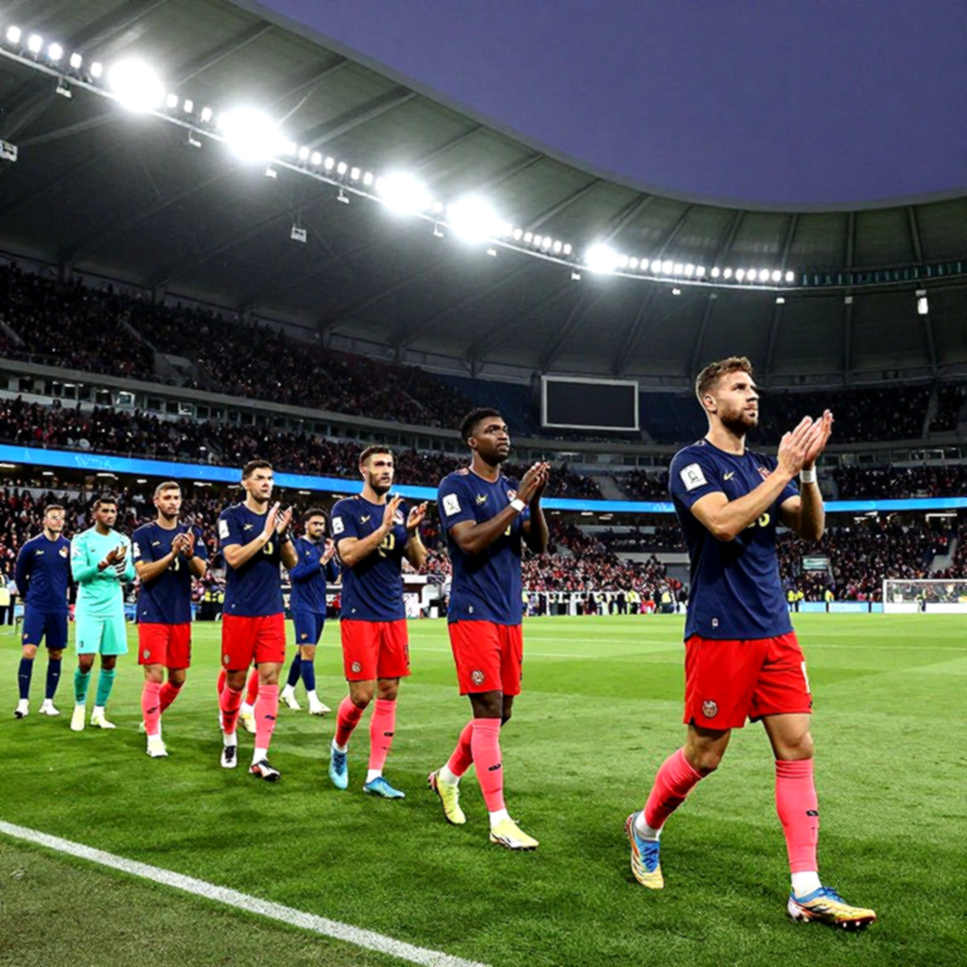
After the red card, Indonesia changed in a way that is very hard to see from the stands. They compressed the space between their lines. Dropping deeper and closing the gaps are two different things. Dropping deeper turns your own goal into an easier target; erasing the space between lines removes the opponent's place to play in dangerous areas. Tan Cheng Hoe said Indonesia defended deeper and more compactly — and from the mouth of a coach who just dropped points, that is the heaviest compliment of the press conference.
Structurally, a team down to ten men usually accepts losing width to keep its vertical shape. They sacrifice the wide midfielders, abandon high pressing, and pull the block into four or five defenders with four players just in front. The consequence is that the opponent is forced to attack in the way a low block defends most easily: get the ball wide and cross. The ball boy by the right corner flag, remember, is the evidence sitting at the edge of the story.
Inside that structure, the goalkeeper changes role. In a low block, Maarten Paes is no longer a shot-stopper — he is the last line of a collective that has deliberately given up control. Tan Cheng Hoe admitted Malaysia created chances, and the same man said Paes was solid. Put those two sentences side by side and you have the whole match.
Malaysia's problem was not chance creation. It was the final stage: the last pass and the last shot. Beating a compact block requires three things — a slipped pass into the gap between defenders and midfielders, a shot from distance that forces the keeper into a hard save, or a well-drilled set piece. Malaysia had chances, but I have no data to say how good those chances were.
This needs to be said plainly: there is no expected goals (xG) figure, no passes allowed per defensive action (PPDA). Without them, any conclusion about how well Indonesia defended or how poorly Malaysia finished is an inference from subjective description. Based on my experience covering matches in Southeast Asia, 0-0 draws against a team down to ten men usually end with a goal from the 70th minute onward, once the block starts to tire. This block did not tire. That deserves credit, and it also deserves a second look next match.
There is a contrarian angle worth weighing here. The most comfortable way to tell this story is as a tale of Indonesian spirit: ten men, a red card, a clean sheet. But read closely and that clean sheet is woven from two different threads — Indonesia's defensive organisation and Malaysia's finishing. And when a coach says facing ten men is never easy, he is stating a tactical truth and building a shield for his players at the same time. "We created chances" is what people say when they do not want to talk about not scoring.
Another layer goes largely unmentioned: both Thom Haye and Maarten Paes belong to the group of diaspora players Indonesia has called up from European football. People chase the trophy, but what they are really chasing is a story about themselves — and Indonesia's story right now is being written by names born elsewhere. In a match decided by a red card and a few saves, that recruitment model showed both its value and its risk: when one of those two is absent, the team's structure has to change. Haye will almost certainly miss the next match through suspension.
Malaysia, meanwhile, leave behind a longer-term question: if a low, compact, self-aware block can frustrate them for more than fifty minutes, what happens in the knockout rounds, against opponents who defend better than Indonesia? The pressure has not landed on Tan Cheng Hoe today, because he carefully kept his comments neutral: satisfied with the result, but admitting missed chances. The pressure will land, if the finishing problem is not solved.
Leaving Jakarta, I kept thinking about the ball boy by the corner flag. A match told through a red card, through ten men, through a low block; but also told through a seat nobody had to leave. The loop does not exist for us to endure it, but so that we catch sight of ourselves in time. Indonesia saw that they could endure. Malaysia have not yet seen what they need to fix. At 26, I write about sport to understand why people stay together — and sometimes the answer is only as long as fifty-odd minutes without a goal.